

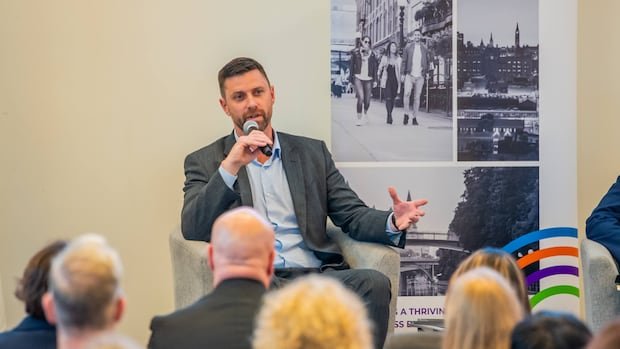

Alex Lawson has emerged as the second top contender vowing to implement a tax cap if he secures the mayoral position in Ottawa. He aims to surpass the current mayor, Mark Sutcliffe, by committing to a freeze on property taxes for the year 2027. Lawson has pledged that if elected, there will be no tax increase that year.
In his recently unveiled fiscal blueprint, Lawson also outlined his plans for the subsequent three years: a one percent cap in 2028 and two percent caps in both 2029 and 2030. On the other hand, Sutcliffe has pledged to maintain tax increases between two to 2.5 percent for 2027 and 2028, expressing challenges in making firm commitments beyond those years.
Lawson’s proposal highlights that Ottawa’s challenge lies not in revenue generation but in addressing what he refers to as a “leaky bucket problem.” The plan emphasizes fixing inefficiencies, maximizing the utilization of every dollar, and ensuring that essential services remain intact without compromising quality.
The last instance of Ottawa freezing property taxes dates back to 2007 under Mayor Larry O’Brien, although taxes gradually increased during the remainder of his term. The city’s current operating budget stands at $5.2 billion, with an additional $1.9 billion allocated for capital expenditures. It faces ongoing financial pressures due to factors such as inflation, rising fuel costs, and increased wages for municipal employees.
Certain city departments, including OC Transpo, have consistently reported deficits, posing additional financial challenges. Unlike revenue streams available to provincial and federal governments, city property tax revenues do not automatically escalate like taxes based on personal incomes or corporate profits. While new housing developments contribute to increased revenue, they also impose additional demands on city services.
Lawson’s proposals include abolishing the vacant unit tax while maintaining the $12.5 million earmarked for affordable housing initiatives it supports. Additionally, he plans to introduce a higher tax exemption for small businesses, which is estimated to result in an $8.4 million revenue loss. Eliminating paid parking citywide would further reduce revenue by nearly $20 million, although the impact on the city’s finances is expected to be minimal as the earnings from paid parking currently only cover operational costs.
To fulfill his tax pledge, Lawson aims to achieve savings of $85 million to $105 million in his first year, covering budgetary pressures and his proposed initiatives. His plan outlines potential annual savings ranging from $77 million to $148 million. In contrast, Sutcliffe has pledged to deliver $250 million in savings over four years, averaging about $63 million annually.
To achieve his savings target, Lawson plans to exclude OC Transpo cost increases and include anticipated revenues from new property assessments. His strategy involves identifying areas for cost reduction, with major savings anticipated from streamlining procurement processes, internalizing consultant services, and enhancing efficiency in hiring practices through the use of artificial intelligence.
Moreover, Lawson intends to curb excessive end-of-year departmental spending. The city has already implemented a hiring freeze for non-essential positions and discretionary spending to manage costs effectively. While Lawson’s plan incorporates the costs of his proposed initiatives, it does not factor in potential revenue losses from the elimination of parking fees.
Two other prominent mayoral candidates have not committed to tax caps. Jeff Leiper has not specified overall property tax increases if elected but has proposed allocating a one percent increase towards infrastructure improvements. Neil Saravanamuttoo believes it would be premature to commit to a specific tax figure due to uncertainties surrounding infrastructure funding gaps and potential savings within city administration.