


Bill Gammell has a strong connection to Canada due to his family roots. Although his parents became U.S. citizens, his father and mother were originally from Nova Scotia and Prince Edward Island, respectively. Additionally, three of his four grandparents hail from P.E.I. Gammell owns a summer residence in Eglington, a property that he later discovered belonged to his great-great-grandfather.
Residing in Tolland, Conn., Gammell is part of a growing trend of individuals, predominantly Americans, seeking Canadian citizenship. He expressed his belief that the current global landscape is less stable, with deteriorating international relations and alliances, prompting him to view having a second passport as a form of added security.
Following the enactment of Bill C-3 by Parliament, which addresses “Lost Canadian” cases, there has been a significant surge in citizenship certificate applications. This legislation allows individuals to claim Canadian citizenship by proving ancestry, even across multiple generations. Gammell submitted his application in February 2025 and was informed of its processing status the following month. As of July, approximately 2,500 applicants were ahead of him in line, with around 115,000 individuals queued for processing.
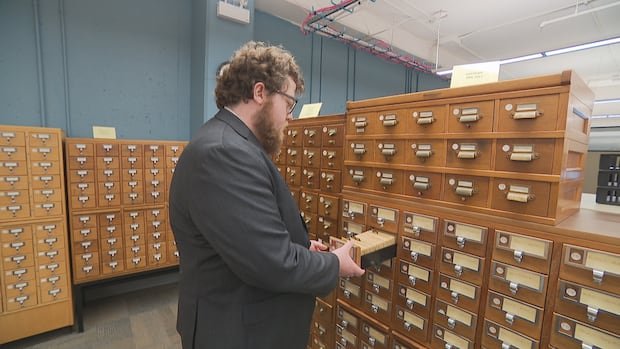
Liam Richardson, an archivist at the provincial Public Archives and Records Office, noted a substantial increase in citizenship-related requests since January. The surge in applications, which has led to processing rates equivalent to a year’s worth of requests monthly, can be attributed to various events in the United States triggering heightened interest in ancestral connections to Canada.
Despite the recent political divisiveness in the U.S., Gammell sees his values aligning closely with those of Canada, prompting his decision to pursue Canadian citizenship. Richardson believes that while many applicants view citizenship as a backup plan, there is also a growing interest in exploring ancestral heritage. Moreover, both Gammell and Richardson agree that the influx of citizenship applications is unlikely to result in a mass migration to Canada, as most applicants are driven by emotional ties rather than practical intentions.