

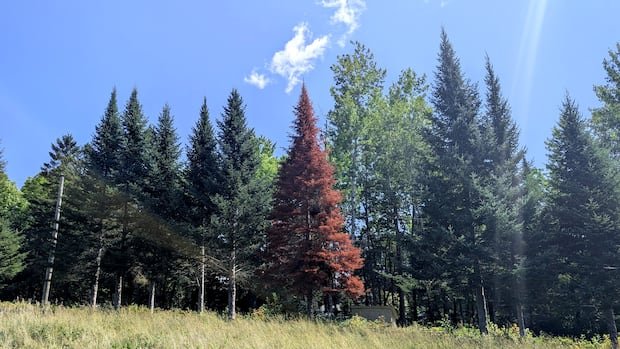

Balsam fir trees in New Brunswick are exhibiting a concerning phenomenon of turning red and perishing following the unprecedented drought experienced last summer. This situation is casting doubts on the sustainability of the provincial tree. Prof. Anthony Taylor, a forestry researcher at the University of New Brunswick, has observed firsthand the distressing effects on these iconic evergreen trees, often used as Christmas trees. He noted that the current scenario aligns with previous occurrences after hot and dry summers.
The adverse impact of warm and dry conditions, such as the recent drought, on the growth capacity of balsam fir trees is well-documented. Prof. Taylor, who has been investigating the influence of climate change on New Brunswick’s forests for an extended period, highlighted similar die-offs in the aftermath of unusually scorching and dry seasons in 1986 and 2018.
According to Prof. Taylor, the trees halt the photosynthesis process prematurely in response to drought stress, impeding their growth. This disruption leads to a deficiency in energy reserves crucial for sustaining basic metabolic functions and producing defense mechanisms.
The shallow root system of balsam firs exacerbates their vulnerability during dry periods as they struggle to access sufficient water. Peter McKeil, a woodlot owner, observed the gradual reddening and deterioration of the trees on his property since June, with new red spots emerging continuously. Despite salvaging some of the deceased trees for lumber, McKeil has altered his harvesting strategies to maximize the remaining fir trees before further losses occur.
Expressing concerns about the future of the species in the face of escalating climate change impacts, McKeil emphasized that adaptation or disappearance seem inevitable, particularly in southern New Brunswick. He anticipates a northward migration of balsam firs, driven by the changing climate conditions.
Prof. Taylor believes the visible distress of the red trees this year serves as a tangible indicator of the detrimental effects of climate change on New Brunswick’s symbolic tree. He likened the situation to a warning sign, urging society to urgently transition away from fossil fuels and adopt sustainable forest management practices to combat climate change effectively.
In conclusion, the ongoing challenges faced by balsam fir trees underscore the urgent need for climate action to mitigate further environmental degradation and safeguard the future of these iconic trees.