

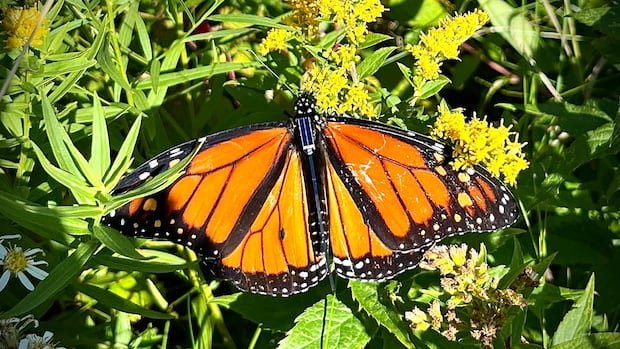

Nature NB has introduced innovative technology to track monarch butterflies in New Brunswick this season, eliminating the need for luck in finding tagged butterflies along their migration route. The organization partnered with various groups to deploy Bluetooth-enabled tags, known as BluMorpho tags, on monarchs in the region. These tiny, solar-powered tags weigh just 0.066 grams and are attached to the butterfly’s thorax using eyelash glue.
Unlike traditional wing tags that require physical recapture, BluMorpho tags work through passive Bluetooth interactions. When individuals with Bluetooth enabled on their phones come within 100 meters of a tagged monarch, data points are automatically logged. This advancement marks a significant shift in monarch conservation efforts, allowing for real-time tracking and data collection.
The technology, first used on monarchs in Canada last year, has provided valuable insights into migration patterns. Nature NB faced delays in receiving all 35 expected tags due to border complications, but they aim to deploy 22 tags this season, with the potential for more if the remaining shipment arrives in time. Similarly, supply issues affected another team, with some tags stuck in customs.
Early data from the tagged monarchs has already confirmed suspicions about migration routes, such as monarchs stopping at Point Lepreau before heading towards Grand Manan. Additionally, unexpected findings, like monarchs ending up in Nova Scotia due to strong westerly winds, have offered researchers new information on migration behaviors influenced by environmental factors.
Tracking individual migration routes can help identify key natural corridors that monarchs rely on, aiding in conservation efforts to protect these crucial habitats. By downloading the Project Monarch app, anyone can follow the tagged monarchs in New Brunswick, each tagged with the prefix PLBO for Point Lepreau Bird Observatory. Nature NB anticipates tagging a total of 22 monarchs by the end of the season.