

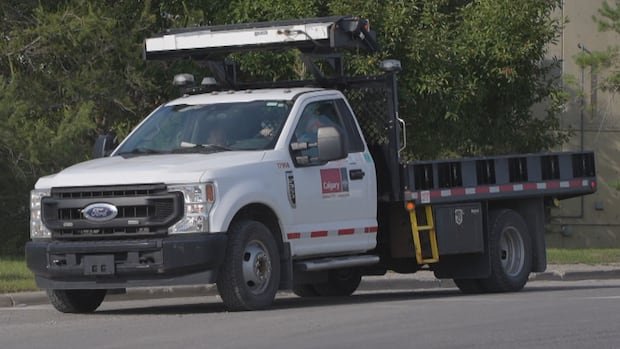

The City of Calgary’s policy on handling traffic fines for its employees operating city vehicles has shifted over the last three years, with taxpayers now footing the bill for nearly $120,000 in fines, as per data obtained by CBC News. Since April 2023, the city has been covering routine on-duty traffic fines for employees operating city vehicles or equipment, aligning with settlements reached through grievance procedures and union arbitration, similar to practices in other Alberta municipalities, stated Christy Schaefer, manager of fleet training and compliance at operational services.
Exceptions to this policy include cases of gross negligence, impaired driving, dangerous driving, distracted driving, or Criminal Code violations, clarified Schaefer. The city’s decision to update its approach was influenced by a union arbitration ruling involving the City of Edmonton, prompting Calgary to align its practices with Edmonton and other municipalities in the province.
Comparing policies, the cities of Lethbridge and Medicine Hat confirmed that their employees are accountable for fines accrued while driving city vehicles, differing from Calgary’s current arrangement. Data shows a decline in the number of tickets issued to City of Calgary vehicles, dropping to 96 in 2025 from 189 in 2024, with the majority of infractions being for speeding or running red lights.
Overall, the Calgary Police Service recorded a decrease in the total number of tickets issued by officers, photo radar, or speed-on-green cameras during this period, down from roughly 210,000 to just under 100,000. The city also covers parking infractions occurring at private lots, although incidents are infrequent, averaging three to four annually.
Despite the relatively small fraction of tickets issued to city vehicles in the city, concerns were raised by Ward 13 Coun. Dan McLean regarding taxpayers bearing the burden of these fines before the city’s policy clarification. However, Schaefer emphasized that employees driving city vehicles undergo thorough training and qualifications to ensure safe and professional operation.
With Calgary boasting the largest fleet in Alberta comprising around 6,000 vehicles covering over 90 million kilometers annually, Schaefer reassured that the city maintains a robust operator qualification and compliance program. While acknowledging the pressures faced by drivers due to tight schedules, Mike Maher, president of the Amalgamated Transit Union Local 583, highlighted the importance of realistic schedules to reduce stress and uphold service quality.
Calgary Transit reiterated its commitment to safety, noting that traffic violations among transit operators are dispersed across the city and various times, emphasizing the prioritization of safety over schedules. Revenue generated from traffic fines is shared between the province and municipalities.