


As the deadline for U.S. President Donald Trump’s latest tariff approaches, Canada and the U.S. have not yet reached a point where they can agree on a tariff deal. Two sources familiar with the trade talks have indicated that Canadian officials are not satisfied with the most recent offer from the U.S.
Reports from both sides of the border suggest that on Tuesday, the Americans presented a new proposal aimed at reducing some sectoral tariffs. However, the proposal did not meet the expectations of the Canadian side. Negotiations have been ongoing in the past weeks in an attempt to secure a deal before August 19, the date when Trump has threatened to impose a 50 percent levy on numerous Canadian goods in addition to existing sectoral tariffs.
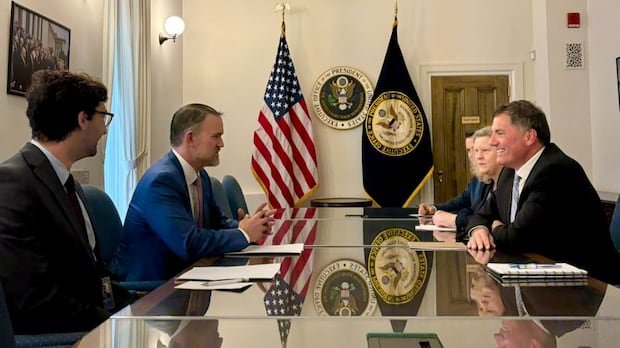
According to sources, the U.S. is pushing for a deal that would grant them preferential access to Canadian critical minerals, covering security and energy aspects. Dominic LeBlanc, the Canada-U.S. Trade Minister, has held multiple meetings with U.S. Trade Representative Jamieson Greer in Washington over the past few weeks. The goal is to present Trump with a potential trade agreement as early as Monday.
It has been conveyed to the Americans by the Canadian side that if the August 19 tariffs are implemented, there will be little support among Canadians to continue negotiations. Both parties have agreed to hold daily meetings at various levels leading up to the deadline.
Despite declining to answer questions from reporters after a meeting with Greer, LeBlanc later confirmed that discussions are ongoing. He emphasized that he and Janice Charette, Canada’s chief trade negotiator, will persist in engaging at the negotiation table.
Apart from discouraging new tariffs, LeBlanc and Charette are also seeking relief from the tariffs imposed by the U.S. on Canadian steel, aluminum, lumber, and automobiles. Canada is hopeful that ongoing trade discussions will lead to the renewal of the Canada-U.S.-Mexico Agreement (CUSMA), especially after the Trump administration’s recent decision not to extend the deal beyond 2036.
In response to various trade issues raised by the U.S., including Canada’s actions against U.S. trade policies, LeBlanc and Charette are exploring options for resolving these matters. Poilievre, the Conservative Leader, has urged them to stand firm and secure a favorable deal for Canadians, including zero tariffs on softwood lumber and an end to sectoral tariffs on steel and aluminum. Industry sources have indicated that Canada is preparing to address some U.S. demands, such as lifting the booze bans, in exchange for tariff relief.