


Canada is not required to halt its industries or endure a severe economic downturn to effectively combat climate change, testified one of the nation’s prominent climate scientists during a pivotal trial in a Vancouver court this week.
According to Simon Donner, a professor at the University of British Columbia and a significant figure in climate science and policy advocacy, Canada must overhaul its energy framework and get ready for a new future characterized by low emissions.
“Changing technologies and transforming our practices will incur costs. However, there are also advantages since these new technologies can be profitable,” Donner informed the court on Tuesday.
Donner was providing testimony on behalf of the 15 young plaintiffs who are suing the federal government, claiming that Ottawa is infringing upon their constitutional rights by failing to adequately reduce carbon emissions and secure a sustainable future.
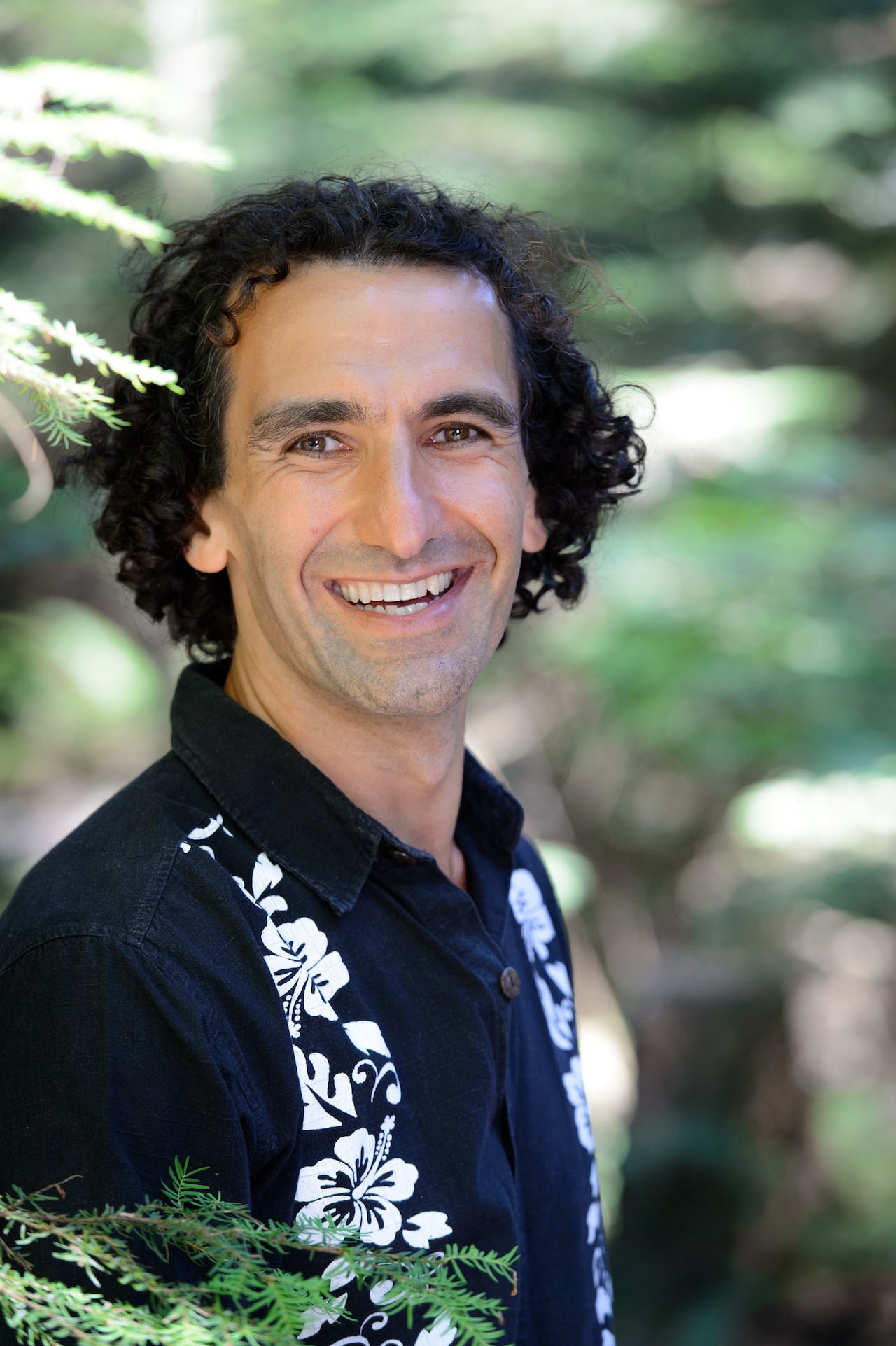
Simon Donner is a leading climate science and public policy researcher at the University of British Columbia. (Don Erhardt)
The government, which will have its witnesses testify next week, is anticipated to argue that Canada’s actions cannot be directly associated with the climate-related harms experienced by the plaintiffs, as climate change is a global issue. During the cross-examination of Donner, the government’s attorney questioned him about whether specific carbon molecules present in the atmosphere and their corresponding climate consequences could be traced back to Canada.
“No one typically approaches a pollution issue in this manner,” Donner replied.
“If numerous factories are releasing mercury into a lake, nobody is asking, ‘Is my specific mercury molecule responsible for this fish’s death?'”
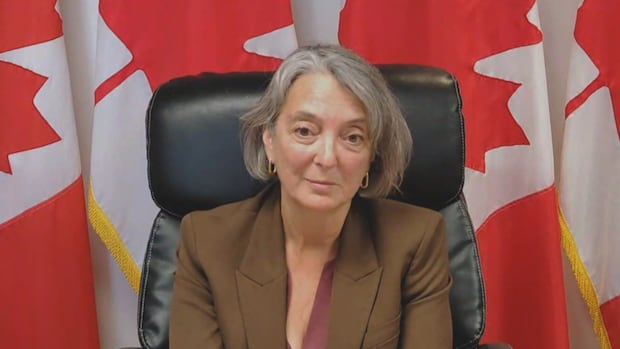
A new report from the Canadian Climate Institute indicates that the country’s greenhouse gas emissions rose in 2025, further distancing Canada from achieving its 2030 climate targets. When asked by Power & Politics if her government plans to adjust those climate goals, Environment Minister Julie Dabrusin stated that the targets ‘were always ambitious’ and that Canada is ‘stepping up’ to combat climate change — with Ottawa’s new heat pump rebate being ‘just one part’ of that effort.
Donner’s message is not new; he has advocated for decarbonization and has contributed to both international and Canadian climate policy discussions for over ten years. However, his current courtroom platform reflects the recent trends in climate action under Prime Minister Mark Carney’s administration.
Feds, climate advisory body at odds
Donner served as the co-chair of the Net-Zero Advisory Body, an independent panel of specialists formed by Justin Trudeau’s government in 2022.
The body was intended to provide guidance for the government’s climate strategy, but in 2025, Donner and fellow member Catherine Abreu publicly resigned, claiming their recommendations were not being sought or taken into account as the government rushed to approve LNG and other fossil fuel and mining initiatives.
The NZAB has since dwindled to three members from a maximum of 15, and its operations are currently in “remission,” according to Damon Matthews, one of the remaining members and a climate scientist at Concordia University.
On Tuesday, Matthews informed CBC that the NZAB lacks the necessary resources to fulfill its responsibilities, and there has been little communication with the government since the last election. Nevertheless, he mentioned that the NZAB is currently discussing a way to reinstate its activities with the federal environment minister.
Matthews has also submitted a report on behalf of a group of youth applicants in a separate climate lawsuit against the Ontario government.
“Perhaps the legal system can serve as a means to slow down the forces that are actively trying to stall, postpone, and obstruct climate action in this country,” he stated.
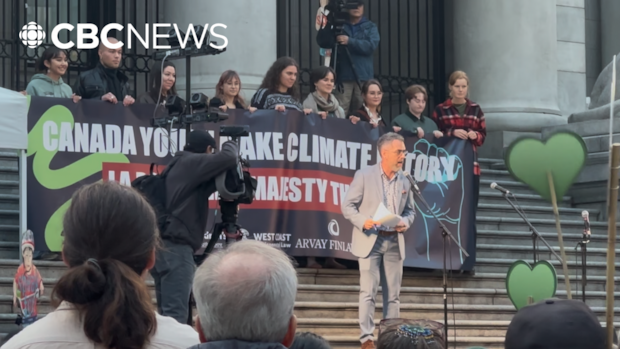
For the first time in Canada, a youth-led climate lawsuit against the federal government has reached a full trial. Fifteen young Canadians are arguing that Canada’s response to climate change is inadequate and violates their constitutional rights. The landmark case could have major implications for Canada’s climate policies and the government’s legal responsibilities.
Scientists outline path to lower emissions
Donner has been joined by several distinguished Canadian scientists providing testimony in the Vancouver courtroom on behalf of the youth plaintiffs. The trial is currently in its second week, with plaintiff witnesses taking the stand.
The government’s experts, including specialists in climate science, law, and economics, will present their testimonies from November 9 to November 20. Following that, the court will break and reconvene in February, when attorneys for both parties will deliver their closing arguments.
Last week, Kirsten Zickfeld, a climate science professor at Simon Fraser University, testified regarding the carbon budget, which refers to the amount of carbon emissions permissible before global warming reaches dangerous levels.
-
Oil and gas emissions rising as other sectors mostly flat, federal data shows
-
What on Earth
Is Canada flunking climate? The picture isn’t great, but there might be a way out
As one of the world’s top ten carbon emitters, both currently and historically, Canada has already exceeded its fair share of the carbon budget, she testified.
“To stabilize average global temperatures, global carbon dioxide emissions must be reduced to at least net-zero, and the emissions of other greenhouse gases like methane and nitrous oxide must be significantly curtailed,” she stated.
Next week, Nicholas Rivers, a University of Ottawa professor specializing in climate policy and economic modeling, will testify about strategies for achieving lower emissions.
Youth should be ‘planning their futures, not fighting in court’
Numerous youth plaintiffs also shared their experiences regarding how climate-related disasters have impacted their lives. Most of them were preteens or teenagers when the case was initiated in 2019; since then, they have endured events like the 2023 Yellowknife wildfires, the 2021 B.C. heat dome, significant floods, droughts, and poor air quality due to wildfire smoke.
Donner’s testimony concentrated on findings from government documents and climate attribution studies that indicate these disasters will become more severe and frequent if emissions are not reduced.
“These are narratives that many Canadians have either experienced directly or know others who have faced these impacts,” stated Andrew Gage, a staff attorney at West Coast Environmental Law, which is backing the case.
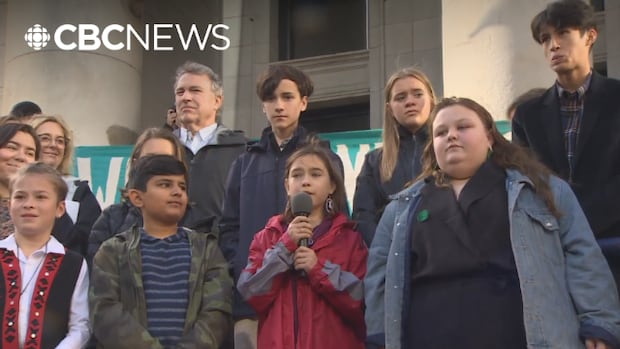
It’s being called a Canadian first: a trial over the federal government’s climate policies has started in Vancouver after a group of young people filed a lawsuit claiming their Charter rights have been violated.
Tzeporah Berman, a Canadian climate activist, remarked that the timing of the trial is significant, as climate-related disasters have become increasingly apparent and frequent — all while the federal government is reducing its efforts to cut emissions.
“I’ve heard numerous individuals express admiration for [the youth plaintiffs] this week. We owe our youth more than mere admiration; we owe them proactive measures,” stated Berman, who chairs the Fossil Fuel Non-Proliferation Treaty Initiative, which aims to establish a global consensus on ceasing the use of oil, gas, and coal.
“These young Canadians should be focused on planning their future, not engaged in court battles to secure the possibility of having one.”