

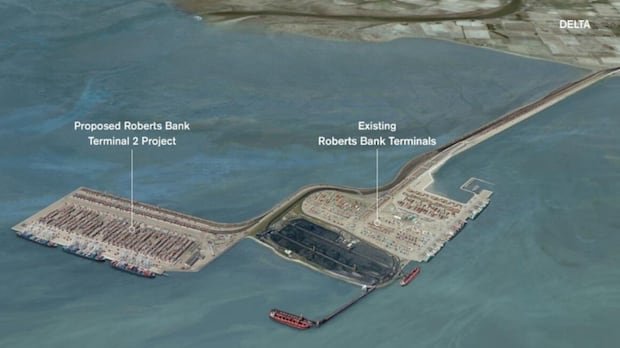

The Canadian government is moving forward with the process to potentially classify the Roberts Bank Terminal 2 port expansion in Vancouver as a project of national interest. A notification posted in the Canada Gazette on August 29 initiates a 30-day consultation phase to determine whether the port expansion should be listed as a project of national interest under the Building Canada Act. This designation would allow expedited approval processes, including environmental assessments, for projects deemed to be in the national interest.
The Liberal government, in announcing the possible listing of both the terminal and the Mackenzie Valley Highway project in the Northwest Territories, emphasized that these projects could enhance Canada’s transportation and trade networks and bolster the country’s long-term economic sovereignty. Despite these benefits, environmental organizations express concerns that expediting the port expansion could lead to circumventing environmental safeguards.
The Roberts Bank Terminal 2 (RBT2) port expansion project, spearheaded by the Vancouver Fraser Port Authority, aims to create a three-berth container terminal to boost the port’s capacity by almost 50% and generate around $100 billion in annual trade capacity. The federal government sanctioned the project in 2023, imposing 370 legally binding conditions to address environmental worries. Additionally, in the same year, British Columbia issued an environmental assessment certificate with 16 supplementary conditions for the project.
Despite acknowledging that the project may result in significant adverse environmental impacts, both levels of government deemed the project justified under the circumstances. The RBT2 project is currently in the process of obtaining final environmental permits, including approval from Fisheries and Oceans Canada regarding compliance with the Species at Risk Act (SARA). However, if granted national-interest status, the project could potentially receive exemptions from certain regulations, such as SARA.
In a recent development, Prime Minister Mark Carney revealed $10 billion in federal backing for the expansion project as part of a broader agreement with British Columbia. The proposed expansion site in the Fraser River estuary is a critical habitat for numerous species, many of which are endangered.
Environmentalists argue that constructing a “mega port” in this biodiverse estuary could have detrimental effects on the ecosystem. Despite legal conditions imposed and efforts to mitigate environmental impacts, concerns persist about the potential harm the project could bring to species like southern resident killer whales and chinook salmon.
Efforts are being made to restore habitat and protect key species like juvenile Chinook salmon and Dungeness crab. The port authority also plans to implement measures to safeguard southern resident killer whales, such as requiring ships to participate in programs that reduce underwater noise. However, environmental groups remain skeptical, suggesting that fast-tracking projects like these may prioritize construction over environmental conservation.
With proposed changes to environmental regulations, including the Species at Risk Act, the government aims to streamline project approvals. Critics argue that these changes could undermine environmental protections and species conservation efforts. Scientists and environmentalists have raised concerns about potential exemptions for certain projects from critical assessments, urging a more thorough consideration of environmental impacts before proceeding with major developments.