

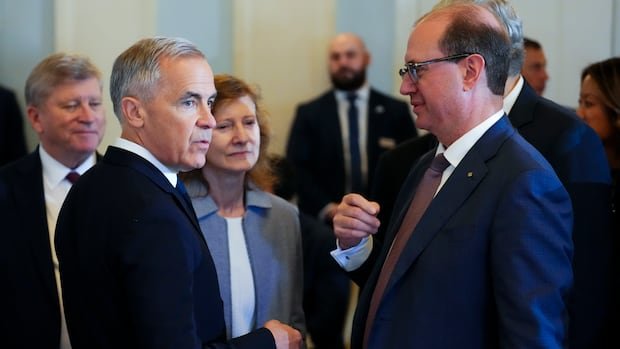

Canada’s envoy to the U.S. emphasized the importance of reintroducing American alcohol to Canadian markets as a necessary step in sealing a trade agreement to avert potential tariffs, according to insights gathered by CBC News. Ambassador Mark Wiseman conveyed this message while providing a comprehensive overview of the trade deal to approximately 100 members of the Canada-U.S. trade council.
The council, comprising various businesses, industry entities, and labor groups, also received input from a former Canadian chief trade negotiator who expressed reservations about the proposed agreement. As Canadian negotiators engage in urgent discussions with the Trump administration in Washington to prevent hefty tariffs on Canadian exports, time is running out as the deadline for reaching a resolution looms at midnight on Friday.
In his presentation lasting around 30 minutes, Wiseman outlined a tentative consensus aimed at avoiding the implementation of new tariffs, as disclosed by three sources familiar with the call. The sources, who preferred not to be identified due to lack of authorization to discuss the matter publicly, shared that Wiseman mentioned the ongoing efforts of approximately 35 Canadian officials at the Canadian Embassy in Washington to finalize the agreement text within a 24 to 48-hour timeframe.
Wiseman highlighted key aspects of the potential deal, including potential reductions in steel, aluminum, and automotive tariffs, as well as alterations to the allocation of dairy import licenses by the Canadian government. Concerns were raised regarding the potential influx of American dairy products onto Canadian retail shelves as a result of these modifications.
Following Wiseman’s departure from the call, Steve Verheul, a prominent figure in Canadian trade negotiations, cautioned the council about the risks associated with the proposed deal. Verheul, who played a pivotal role in the development of the Canada-U.S.-Mexico Agreement and previous NAFTA talks, expressed apprehensions about conceding to sectoral tariffs and making significant compromises.
Verheul’s remarks underscored the notion that Canada could be relinquishing its leverage prematurely by acquiescing to certain demands, potentially undermining its position during future trade discussions. He emphasized the importance of clarifying Canada’s stance on tariffs and maintaining a focus on achieving duty-free trade, particularly during the upcoming CUSMA review.
Furthermore, concerns were raised about the lack of adequate consultation with relevant industries by the Canadian government, contrasting with the detailed briefings received by the U.S. industry from the Trump administration. The council also discussed the potential challenges of retracting tariffs once agreed upon, even in the event of future changes in U.S. administration.
The involvement of key figures like former finance minister Chrystia Freeland in the call highlighted the significance of the ongoing negotiations and the potential implications for Canada’s trade relationships. Freeland’s queries echoed the sentiment that committing to tariffs could have long-lasting repercussions and emphasized the need for careful deliberation and strategic decision-making moving forward.