

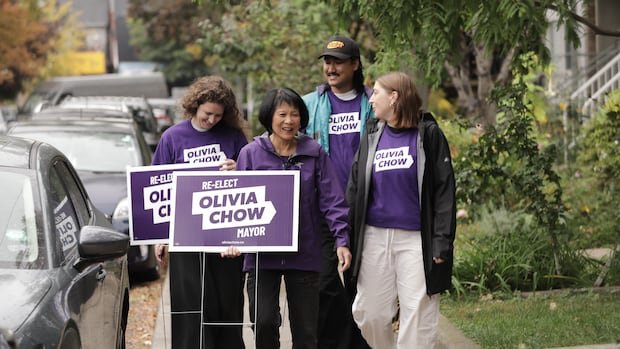

Olivia Chow has announced plans to introduce a citywide universal student nutrition program if re-elected as mayor, a proposal that her main opponent criticizes as lacking funding and experts believe Toronto cannot implement independently.
Chow’s election promise involves expanding the existing school food program to provide lunch in addition to midday snacks for the 330,000 students served daily, with the city’s current annual contribution standing at $32 million. She presented the initiative as a significant affordability measure, estimating it could save the average family $1,800 per year. However, the exact cost of the expansion remains unspecified, with Chow indicating a phased implementation by 2030, in collaboration with other government levels and private donors.
During a debate in Scarborough, Chow emphasized the importance of addressing hunger in schools, highlighting its impact on children’s ability to concentrate. In contrast, Coun. Brad Bradford, Chow’s primary rival, expressed support for the idea but raised concerns about the lack of clarity on funding sources, noting the absence of national or provincial programs for such initiatives.
Currently, the city’s student food program receives funding from federal, provincial, and municipal sources, alongside private donations and grants. Last year, the city secured $4.7 million in federal funding and $8.5 million in provincial funding for school food programs, with the city contributing $21.9 million, later increased to $32 million in the 2026 budget.
The federal government and the province have not confirmed their commitment to funding the expansion of Toronto’s program to a universal level. In 2024, the federal government pledged $1 billion over five years to collaborate with provinces on school food programs, with Prime Minister Mark Carney’s budget earmarking $216.6 million for permanent funding.
Advocates argue that universal programs help eliminate barriers to participation, stressing the importance of piloting such initiatives to ensure inclusivity without imposing mandatory participation. The Daily Bread Food Bank supports the universal program concept, citing a significant rise in visits, especially among children, underscoring the need for expanded nutrition programs.
Estimates suggest that establishing a citywide universal food program could require an additional annual investment ranging from $20 to $80 million. While startup costs may pose challenges, potential savings through bulk purchasing and collaboration with higher levels of government could facilitate the program’s long-term sustainability.