

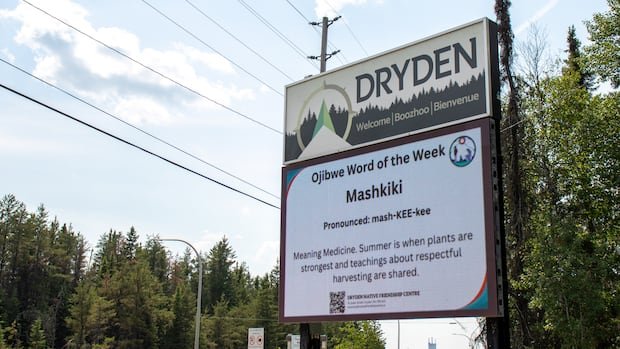

The City of Dryden is urging Canada’s Major Projects Office to reconsider fast-tracking the proposed deep geological repository (DGR) in northwestern Ontario. The $26-billion project, spearheaded by the Nuclear Waste Management Organization (NWMO), aims to bury Canada’s nuclear waste hundreds of meters underground near Ignace and Wabigoon Lake Ojibway Nation. The federal government initially flagged the project as a potential national interest undertaking in June, and the formal notice was published in the Canada Gazette on September 19.
Projects designated as of national interest could benefit from streamlined federal approvals under the Building Canada Act. Dryden’s Mayor, Jack Harrison, emphasized the need to thoroughly assess both the positive and negative impacts of the project before proceeding.
Dryden, located close to the proposed DGR site, considers itself a crucial partner due to its proximity and role as a regional service hub. Harrison stressed the importance of ensuring that all potential impacts on the community are addressed before any accelerated progress is made.
To further evaluate the project’s effects on Dryden, the city has commissioned Deloitte LLP to conduct an independent regional impact assessment, with costs estimated at nearly $600,000. Harrison expects NWMO to cover this expense, highlighting the organization’s responsibility to understand and address the project’s community impacts.
Vince Ponka, Indigenous and regional communications manager at NWMO, acknowledged Dryden’s concerns and expressed openness to resuming negotiations in the future. Ponka emphasized that the project will proceed only with the approval of regulators, ensuring safety and compliance with technical, environmental, socioeconomic, and engineering standards.
Despite the potential national interest designation, NWMO remains committed to completing federal impact assessments, obtaining Canadian Nuclear Safety Commission licenses, and engaging with Indigenous communities and municipalities. The project’s advancement, Ponka stated, will align with regulatory requirements to guarantee safety and adherence to standards.