

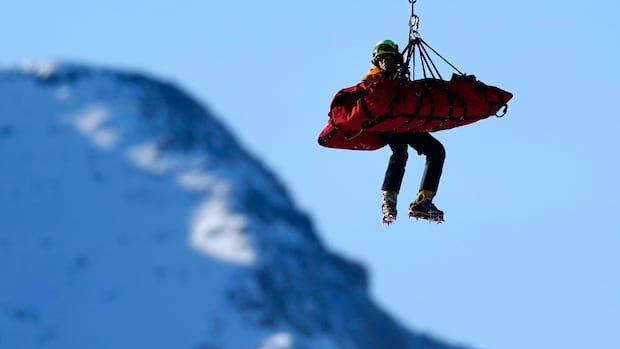

In the Canadian Rockies, numerous rescues occur annually within national and provincial parks. Kananaskis Mountain Rescue experienced a peak of 445 incidents in 2025, while Banff, Jasper, Kootenay, and Yoho national parks collectively handled around 250 incidents. The majority of these incidents involve minor injuries like broken bones, twisted ankles, and lost individuals, but serious injuries or fatalities also occur occasionally, attracting significant public attention.
One common question that arises is who bears the cost of these rescue operations. Marc Ledwidge, a former rescue specialist at Parks Canada, acknowledges the debate over whether those requiring assistance should be responsible for the expenses but emphasizes the importance of the service’s availability. Ledwidge recalled an unsuccessful attempt in the early 1990s to implement a billing system for rescues when a backcountry trip company refused to pay, leading to the abandonment of the cost recovery initiative.
Funding for rescue services typically comes from a combination of public funding and park entry fees. For instance, Kananaskis Mountain Rescue’s annual budget of approximately $1.5 million is covered through the Kananaskis Conservation Pass. In the 2025-26 fiscal year, there were 110 rescues in Banff, Yoho, and Kootenay national parks, costing around $683,000, with the minimum cost for helicopter-assisted rescues set at $4,500 by Parks Canada.
Rescue operations within federal parks are financed through the parks’ annual budgets, partially supported by entry fees. In cases where free entry is allowed, such as with the Canada Strong Pass in recent years, any financial shortfalls are covered by adjustments to the national park budgets. Additionally, multi-agency collaborations involving fire rescue services, police, and paramedics are common during rescue missions.
Volunteer search and rescue groups rely on a mix of government funding and donations to sustain their operations. Public Safety Canada has allocated $9.24 million to Alberta over the past decade, while Search and Rescue Alberta receives $2.4 million annually from the provincial government to support its 1,400 members across 33 volunteer teams.
In most Canadian jurisdictions, rescue operations are not billed to avoid discouraging individuals from seeking help due to financial concerns. However, in Yukon’s Kluane National Park, climbers attempting Mount Logan are required to have insurance covering potential rescue costs, which can amount to $60,000 to $100,000 in remote areas. Parks Canada emphasizes that safety is a shared responsibility, with visitors urged to access park information, plan their trips accordingly, and make informed decisions based on their abilities and local conditions.