

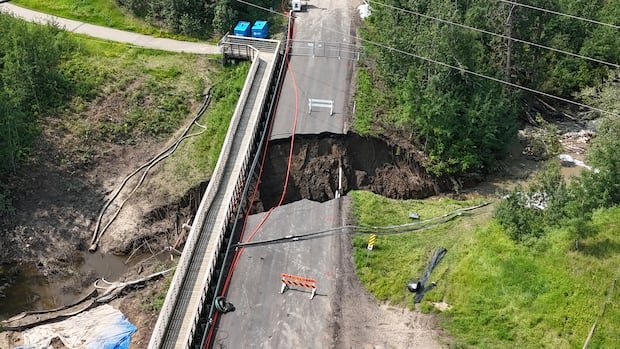

Record levels of rainfall in Edmonton this summer have caused significant damage to city infrastructure and various public construction projects, leading to millions of dollars in losses that are unlikely to be covered by insurance, as revealed in a recent committee meeting attended by city councillors. During the infrastructure committee meeting held on Wednesday, city officials briefed councillors on the impact of the weather on the city’s infrastructure and construction projects.
Since July 10, the city has addressed over 1,400 storm-related operational issues, in addition to pursuing insurance and warranty claims. The city is also collaborating with the province to seek reimbursement through the Hazard Assistance and Resilience Program (HARP), a program designed to provide financial aid to communities affected by disasters, replacing Alberta’s previous disaster assistance programs.
Councillors were informed that the anticipated uninsured losses for the public sector due to the severe weather amount to $42 million. It is expected that HARP will cover 90% of these costs, leaving the city accountable for the remaining 10%.
Projects in their initial stages of construction and those covering larger areas are particularly susceptible to weather disruptions, councillors were informed. David Johnson, the President of the Edmonton Construction Association (ECA), explained to committee members that saturated sites necessitate additional precautions, such as equipment access routes becoming too soft, excavations needing pumping, and trench inspections before work can resume.
Despite contractors generally having contingency plans for adverse weather conditions, Johnson emphasized that this summer’s weather challenges have surpassed the norm. The ongoing rain has led to delays and disruptions in various projects, including the Valley Line West and Capital Line South LRT, as well as land development initiatives in Goodridge Corners, the Exhibition Lands, and Blatchford. Investigations will be conducted to determine the causes of the issues at the Peter Hemingway Aquatic Centre and the Telus World of Science, both of which were closed due to flooding.
While some projects, like the Yellowhead Trail Freeway Conversion and work on Terwillegar Drive, have managed to stay on track despite the weather, others, such as the trestle bridge replacement project on 76 Avenue in Mill Creek Ravine, have experienced minor setbacks. The city has also witnessed erosion, embankment failures, landslides, and trail issues across various locations.
Ryan Christensen, Chair of the ECA board, expressed concerns over the increasing frequency of extreme weather events affecting the construction industry. He urged the city to address weather risks adequately in future contracts. Coun. Erin Rutherford raised the issue of potential insurance premium hikes due to the surge in insurance claims, to which officials indicated that increases are anticipated but measures are in place to mitigate them.