

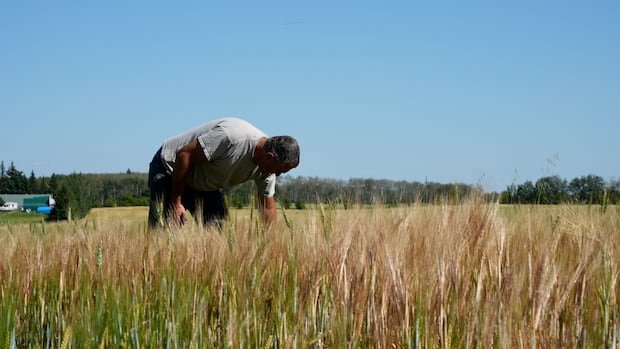

After enduring a rainy few weeks in central Alberta, farmer Jason Lenz from Bentley faced a delayed harvest start. Luckily, he managed to gather his malt barley crops by the end of August amid the wet conditions. Lenz expressed hope for improved weather forecasts in the upcoming week to resume harvesting.
As farmers like Lenz wrap up this year’s harvest, a significant development in the Pacific Ocean could influence the next growing season. Marko Markovic, a physical scientist at Environment and Climate Change Canada, highlighted the high likelihood of a potent El Niño event affecting the Canadian Prairies soon. He mentioned unprecedented sea surface temperature anomalies, with potential values exceeding 3 degrees Celsius, setting the stage for one of the most robust El Niño occurrences on record.
El Niño, characterized by warm water in the Pacific, typically ushers in warmer and drier conditions in the Canadian Prairies, leading to milder winters and springs. Markovic emphasized the impact of global ocean temperature trends on the forthcoming El Niño intensity, potentially resulting in drier soil post-El Niño season in March or April.
Local farmers are gearing up for potentially dry conditions following varied weather patterns in recent years. Kevin Bender, a farmer near Sylvan Lake, recounted fluctuating crop yields from a severe drought in 2024 to record production in 2025. Despite concerns about a dry winter, Bender remains steadfast in conserving moisture and adjusting farming practices if the need arises.
Looking ahead, Bender stressed the importance of timely spring rains over winter snowfall to sustain soil moisture effectively. He underscored the significance of snowpack in replenishing subsoil moisture for cattle and pastureland, highlighting the need for adequate moisture for successful farming operations.
Trevor Hadwen, an agroclimate specialist at Agriculture and Agri-Food Canada, reassured that the agricultural sector is better positioned this time due to sufficient moisture levels across Prairie regions throughout the year. Despite anticipating more severe impacts due to the stronger El Niño, Hadwen emphasized the current healthy water supply in reservoirs as a buffer against potential challenges.
Amidst the uncertainties, optimism prevails among farmers like Bender, who remain hopeful for a productive season ahead. Adapting to changing conditions, preserving soil moisture, and mitigating risks are key strategies as they prepare for the evolving weather patterns.