

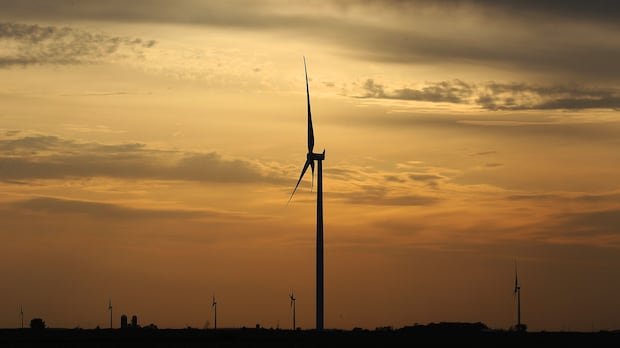

EverWind Fuels, a company focusing on green hydrogen production, has been asked to provide additional information to the province before proceeding with a proposed wind farm project in Guysborough County. Nova Scotia’s Environment Minister, Tim Halman, announced his decision on the Harbour Hills Wind Project, noting that the company did not complete necessary baseline field surveys for the area designated for 30 wind turbines, spanning approximately 6,000 hectares.
The surveys, which must include assessments of various wildlife such as moose, bats, birds, turtles, plants, and lichen, are required to be finished within a year. EverWind spokesperson Claire Parsons stated that the company is currently reviewing the minister’s decision but affirmed their commitment to fulfilling the requested information and continuing the environmental assessment process for the Harbour Hills project.
The Harbour Hills initiative, consisting of 107 turbines, is among three large-scale wind farm proposals by EverWind in Guysborough County. Additionally, the company is engaged in four smaller projects in other regions of the province, with the ultimate goal of utilizing wind energy to power a green hydrogen and ammonia production facility in Point Tupper, Nova Scotia.
In a notable development, one of EverWind’s potential buyers for ammonia, E.ON Group from Germany, has withdrawn from the agreement due to a shift in priorities away from hydrogen-related projects. Despite this setback, EverWind remains optimistic about securing other European partners for offtake agreements.
Meanwhile, Bear Head Energy, another company seeking to establish a green hydrogen production facility in Point Tupper, has gone silent. Although the company received environmental approval for its main facility, no construction has commenced yet. The Environment Department has granted an extension until 2027 for the project to begin.
David Layzell, a professor emeritus at the University of Calgary specializing in environmentally friendly energy systems, emphasized the importance of green hydrogen for global decarbonization. While acknowledging the slower-than-expected progress in the hydrogen industry, Layzell remains confident that green hydrogen production in Nova Scotia is feasible but may require more time to materialize.