

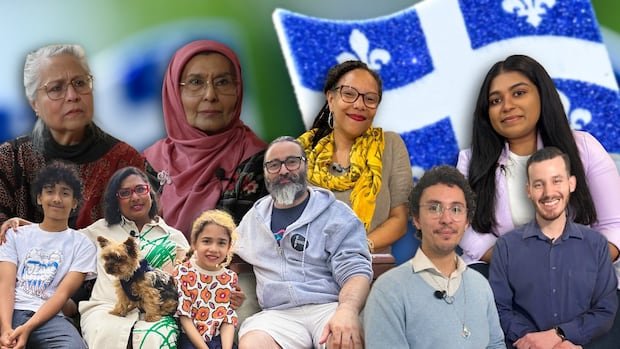

In the realm of political discussions in this region, the topic of Quebec identity, or lâidentité Québécoise in French, consistently arises. But what exactly does it signify, and who has the authority to define it? In anticipation of the provincial election on October 5, a diverse group of Quebec residents shared their varied viewpoints on the matter.
The ensuing conversations revealed a range of perspectives. I engaged with two individuals who migrated from India and Pakistan to Quebec during René Lévesque’s era in the 1970s. Additionally, I conversed with young proponents of sovereignty who have Indigenous and Maghrebi backgrounds.
Moreover, I spoke with a self-identified Montrealer, distinct from a Quebecer, and two others who navigate their Quebec pride while staunchly advocating for English-language institutions.
Let’s delve into their insights.
### Embracing a More Inclusive Quebec
Dolores Chew and Shaheen Ashraf have called Quebec home for over five decades, still finding solace in South Asian customs like savoring a cup of chai. During our tea and snack session, they reminisced fondly about a Quebec under René Lévesque. While one of them supported the ‘Yes’ side in the 1980 referendum, their sense of belonging underwent a transformation thereafter.
### The Youth Driving Quebec’s Sovereignty Movement
Nabil Ben Ali Ouriaghli and Benjamin Gingras, members of Oui Quebec, a grassroots initiative promoting sovereignty, envision an independent Quebec that prioritizes inclusivity and unity. However, they acknowledge the necessity of disseminating this message effectively.
### A Proud Montrealer, Not Quebecer or Canadian
Although Western Canada did not resonate with her, Shereen Joseph found a sense of belonging in Montreal. Settling in the Plateau-Mont-Royal borough, she embraced her identity as a Montrealer, drawing strength from her Malaysian heritage and adapting to the city and its language dynamics.
### Advocating for English-Language Institutions
For Susan Perera and Allison Saunders, English-language schools serve as more than just educational institutions; they foster community and contribute to a bilingual Quebec. Both school board commissioners proudly uphold their Quebec identity, although Saunders occasionally feels she does not conform entirely to certain preconceived notions of Quebecois identity.