

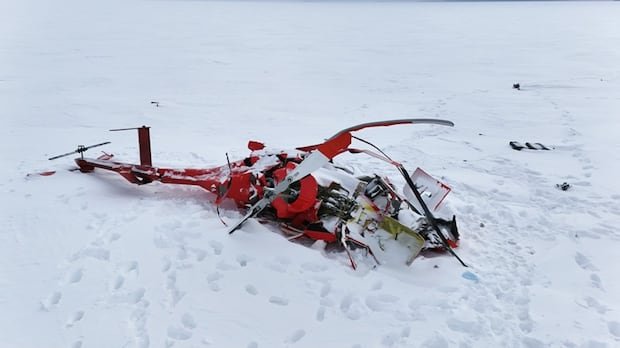

A fatal helicopter crash in northern Alberta on Feb. 12, 2024, was determined to have been caused by severe winter weather conditions, poor visibility due to lack of visual landmarks, and the pilot’s inexperience in flying in harsh weather, according to a report by the Transportation Safety Board of Canada (TSB).
The incident occurred over Lake Athabasca near Fort Chipewyan, Alta., with the pilot being the only person onboard the helicopter. Daryl Collins, a senior investigator with TSB, highlighted that flying over snow-covered terrain during the winter with limited visual references can be challenging for pilots, especially when faced with overcast skies and falling snow, creating potentially hazardous situations.
The pilot was conducting aerial survey work over Lake Athabasca when the weather deteriorated, prompting a return to Fort Chipewyan’s airport. However, encountering adverse weather conditions near the airport, the pilot, lacking experience in such conditions, turned back over the lake. With poor visibility and a lack of visual references, the pilot crashed into the frozen lake, resulting in a fatal outcome.
The phenomenon of losing the ability to navigate visually, known as inadvertent flight into instrument meteorological condition (IIMC), forced the pilot to rely solely on instruments for speed, altitude, and angle guidance without any external landmarks for reference.
Collins emphasized the need for improved training and procedures for flying in challenging conditions, stressing that a reliance solely on avoidance strategies is not sufficient. Following the incident, the helicopter operator, Hanley Heli Service, has implemented enhanced safety measures, including upgraded flight displays and an advanced online learning system for flight crews.
The TSB’s report in 2024 included recommendations to Transport Canada for handling IIMC situations, emphasizing the importance of improved training, equipment, and procedures for flying in adverse conditions. Transport Canada is taking steps to address these recommendations, including reviewing the U.S. Federal Aviation Administration’s initiatives and proposing updates to regulations regarding weather conditions for visual flight in controlled and uncontrolled airspace.
Pilots are required to demonstrate the ability to recover from IIMC when obtaining their commercial helicopter license. However, there are no mandates for operators to ensure ongoing proficiency or provide necessary tools for pilots to manage IIMC situations. TSB Chair Yoan Marier underlined the importance of equipping helicopter pilots with the necessary training and tools to handle IIMC, emphasizing that solely relying on avoidance strategies puts lives at risk.