


A non-profit organization in Fredericton is spearheading an initiative to expand knowledge about the nocturnal insects that gather around porch lights. The Nashwaak Watershed Association is conducting a moth monitoring project, urging residents in the Fredericton vicinity to record the moth species present in their yards and neighboring areas.
According to Allyson Heustis, the association’s executive director, the primary objective is to enhance understanding of biodiversity within the watershed and local region. Diverse moth populations can offer insights into the overall health of nearby forests and vegetation, serving as valuable ecological indicators.
The survey aims to establish a baseline of local moth species, enabling researchers to monitor population fluctuations over time. This project, funded by the New Brunswick Wildlife Trust Fund, commenced in July and will continue through October. Participants are provided with a white sheet and a black light for the survey.
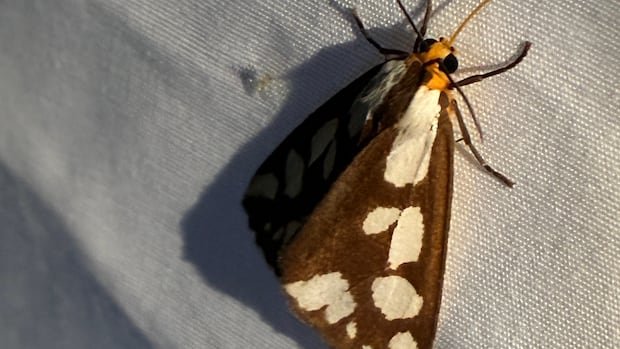
Volunteers set up the light and shine it on the sheet half an hour before sunset to attract insects. After an hour, participants capture images of the moths that land on the sheet and upload them to iNaturalist, a global database utilized by scientists. Heustis highlighted the significance of species data for various biologists.
Zoë Acreman and her grandmother took part in the project, documenting over 500 moths from several species and recording environmental factors like location, time, temperature, cloud cover, and wind speed. John Klymko, a zoologist at the Atlantic Canada Conservation Data Centre, mentioned that New Brunswick hosts more than 1,700 moth species, with many potentially undiscovered.
Klymko expressed concerns about declines in larger moth species such as the luna, cecropia, and sphinx moths, suspecting that other species might also be dwindling. Factors like habitat loss, herbicide use, light pollution, and the introduction of a parasitic fly for moth control are driving these declines. Moths play crucial roles as pollinators, bird food sources, and ecosystem supporters, making the monitoring project pivotal.
Klymko emphasized the importance of monitoring moth populations, referring to them as indicators of ecosystem health. Understanding which species are thriving and which are struggling can guide conservation efforts to support declining species effectively.