

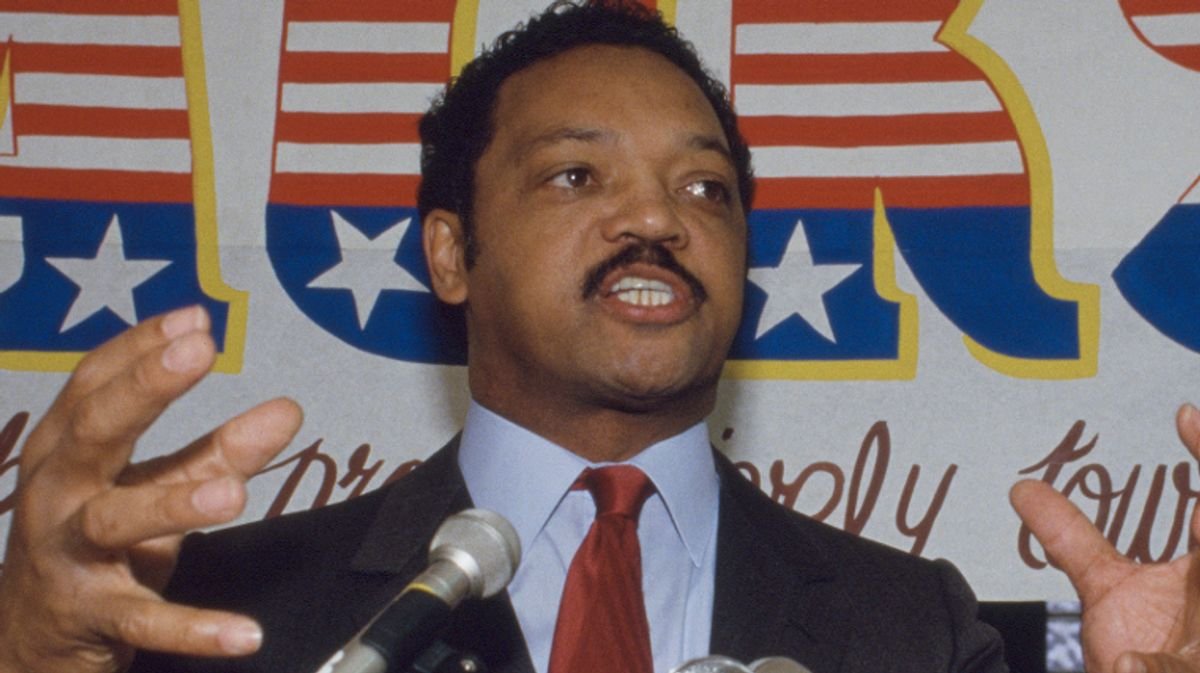

When Jesse Jackson passed away, America didn’t just lose an individual; it lost a connection between different time periods.
The impact of this loss resonated in 2015 when I had a conversation with him upon his arrival in Charleston, South Carolina, shortly after the tragic shooting at Mother Emanuel AME Church. The city was engulfed in sorrow, and the weight of history hung heavily in the air.
On that day, Jackson moved slowly, appearing older than the vibrant image etched in most people’s minds of the energetic activist from the 1980s. His voice, though softer now, retained its sharpness, emphasizing a message that had only grown more poignant over time.
His words transcended mere mourning; they spoke of unity and shared responsibility. Jackson reframed the Charleston tragedy not as an isolated incident but as a part of America’s enduring struggle between exclusion and inclusivity, emphasizing the need to broaden perspectives.
Throughout his life, Jackson galvanized the nation with his vision of a diverse “rainbow coalition” uniting the marginalized and impoverished. Emerging from the impoverished areas of South Carolina and profoundly impacted by Martin Luther King Jr.’s assassination, Jackson’s journey spanned from the darkest days of the civil rights movement to the historic moment of Barack Obama’s presidency.
His passing at 84 prompts a critical question: who will now champion that coalition? Jackson didn’t strive to replicate King but emerged as a distinct political successor, recognizing that activism alone couldn’t secure tangible outcomes. He combined protest with negotiation, boycotts with corporate engagements, becoming a formidable force in American politics for decades.
While some saw him as morally urgent, others criticized his ambition. Yet one undeniable fact remains – he transformed the landscape of American politics.
Although his presidential bids in the 1980s didn’t secure the nomination, they achieved something profound: proving that a Black candidate could forge a viable, multiethnic national alliance. This pivotal moment in 1988, where he led in delegates, paved the way for Barack Obama’s historic ascent.
Beyond electoral achievements, Jackson’s true legacy lay in fostering connections. Rejecting narrow nationalism, he advocated for a shared cause among the dispossessed, irrespective of race or background. Recognizing the cyclical nature of history, he emphasized the necessity of persistence in the face of adversity.
In today’s polarized America, the unity Jackson championed has fractured into cultural divides and partisan strife. While his ideological successors exist within the Democratic Party, maintaining the broad coalition he envisioned remains a challenge.
The rise of right-wing populism has redirected economic discontent into identity politics, diverging from Jackson’s belief in expanding inclusivity. In the absence of a unifying figure after King and Obama, the nation grapples with a void that Jackson once filled as a bridge between grassroots activism and institutional change.
Despite his imperfections, Jackson epitomized the link between street protests and political effectiveness, navigating both arenas adeptly. His legacy endures in his efforts to register voters, secure corporate concessions, and confront societal inequalities long before they gained mainstream attention.
As America mourns Jackson’s passing, it mourns not just a voice but a steadfast belief in uniting impoverished individuals of all backgrounds. His message in Charleston, though softer, implored to keep hope alive and resist despair, leaving a poignant question hanging in the air – will the nation uphold the ideals he fought for?