

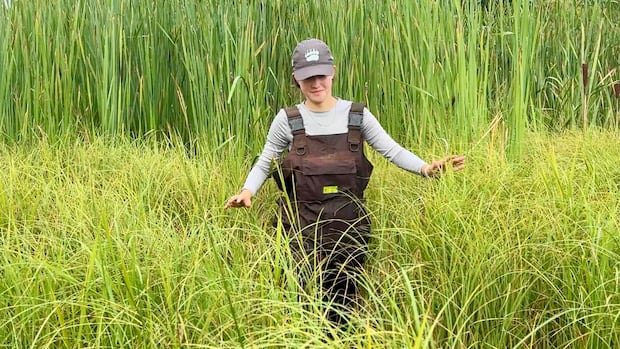

In southwestern Manitoba, there are numerous prairie pothole marshes renowned for their natural filtration properties, often referred to as “nature’s kidneys.” Despite their significance, ecologist and University of Manitoba associate professor, Gordon Goldsborough, highlights that the province lacks a systematic approach to monitor these vital ecosystems, urging the adoption of a standardized wetland assessment protocol.
For over a decade, Goldsborough and his advanced biology students have been diligently gathering wetland data using a consistent methodology tailored for governmental use. However, despite their efforts, the provincial government has yet to utilize this valuable information.
Each summer, the faculty of science conducts a two-week wetland ecology course, with this year seeing 19 students participating. They engaged in fieldwork at various locations, including Delta Marsh, Shoal Lake, CFB Shilo’s unique wetlands, and the Prairie Pothole Region near Minnedosa.
Prairie potholes, formed by receding glaciers, are classified into five categories based on water retention duration. Students assess these potholes, categorizing them from Class 1 to Class 5, mapping their size and documenting plant species like cattails, bulrushes, and giant reeds.
Students like Lauren Musgrove, passionate about wetland conservation, find the hands-on experience enriching and essential for their future careers. The presence of diverse wildlife in wetlands, serving as crucial habitats for breeding and providing food sources, underscores their ecological significance.
While the provincial government lacks a dedicated wetland monitoring program, Manitoba Environment and Climate Change does monitor water quality in over 350 water bodies. Wetlands classified as Class 4 and 5 are safeguarded under the Water Rights Act, prohibiting the drainage of year-round water-holding potholes.
Goldsborough emphasizes the importance of long-term data collection and its role in nurturing future environmental conservationists. He hopes that the government recognizes the value of their work, supporting ongoing initiatives to safeguard these vital ecosystems.