


As the sun set and a solar eclipse dimmed the skies over northern France recently, a group of individuals gathered at a bus stop along a highway, many carrying vivid orange life vests. This assembly, comprised of women and toddlers, disclosed that they had been residing in nearby woodlands for months, awaiting a favorable weather window to board a boat and attempt a crossing of the English Channel.
In current times, the journey has become increasingly challenging. Several migrants interviewed by CBC News reported encounters with law enforcement preventing their passage and, in some instances, deploying tear gas. For years, the 40-kilometer coastal stretch between Dunkirk and Calais has served as a transit point for migrants traversing Europe, with their numbers fluctuating due to various factors like conflicts, migration pathways, weather conditions, and European policies.
Despite an overall decline in crossings, the vessels are now accommodating more migrants, navigating longer and riskier routes across the Channel. These developments coincide with heightened discussions on European migration, particularly following a surge of migrants storming the Spain-Morocco border in the North African Spanish territory of Ceuta in late July.
British politicians swiftly redirected their focus to migrants attempting Channel crossings. Nigel Farage, leader of the anti-immigration Reform UK party, advocated for the Royal Navy to tow them back to France, a proposition countered by former Navy officials who deemed it impractical.
Last year, the U.K. announced an increase in funding for French police operations to £662 million ($1.2 billion Cdn), incorporating the deployment of additional surveillance tools like drones, helicopters, and cameras to deter unauthorized crossings. Aid workers observed that Calais has transformed into a quasi-permanent border zone, with authorities enforcing restrictions on departures and dismantling informal settlements, prompting migrants to seek alternative routes amidst the crackdown.
By the end of July, approximately 14,200 asylum seekers had crossed the Channel, fewer than the corresponding period in 2025 when 25,436 made the journey. NGOs and citizen groups, such as Calais Appeal overseeing support services for migrants in Calais and Dunkirk, emphasized that deterrence measures do not dissuade individuals from attempting the perilous voyage.
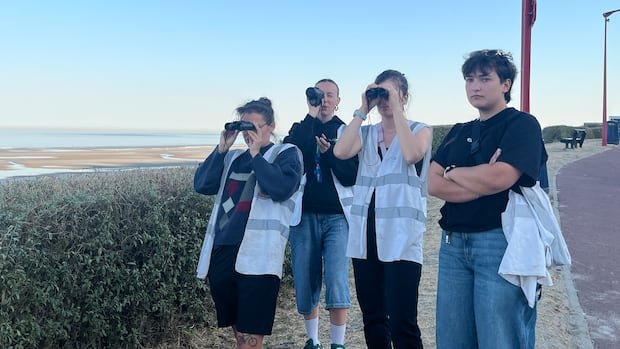
Volunteers continue to provide assistance to stranded migrants, with organizations like Utopia 56 patrolling the northern coast and aiding those facing challenges post-failed crossings. Despite ongoing humanitarian efforts, migrants persist in seeking safer havens, often resorting to overcrowded and larger vessels for their journeys.
The risks associated with migrant smuggling remain grave, with a spokesperson from France’s Maritime Prefecture highlighting the perilous conditions and the increasing use of new tactics by smugglers to circumvent law enforcement. Citizen volunteer sea rescue groups have played a crucial role in aiding rescue operations, emphasizing the need for collaborative efforts to address the evolving migration dynamics.
The narrative of migrants seeking safety and better opportunities, as exemplified by individuals like Mohammed, underscores the complex motivations driving migration. The allure of perceived safety in countries like the U.K. stands juxtaposed against the challenges and hazards encountered during the arduous journey.
Despite diverging views on immigration policy and rising anti-immigration sentiments, grassroots organizations continue their efforts to assist and advocate for migrants, emphasizing the importance of raising awareness about the risks and complexities of migration. As the migration issue persists and intensifies, stakeholders stress the need for comprehensive solutions and international cooperation to address the multifaceted challenges posed by global migration trends.