

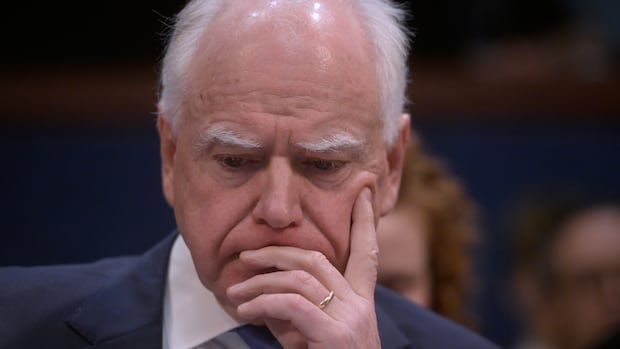

Minnesota Governor Tim Walz announced on Tuesday that the state will not be processing permits for proposed mining projects in the Boundary Waters Canoe Area Wilderness. This decision comes four months after the federal ban on mining in the area was lifted by the U.S. Congress and President Donald Trump’s administration.
The Boundary Waters Canoe Area Wilderness spans approximately 240 kilometers along Minnesota’s border with Canada within the Superior National Forest. It is a popular destination for outdoor enthusiasts, including canoeists, kayakers, and campers.
Governor Walz, a Democrat, emphasized the importance of preserving the wilderness in its pristine state, stating, “It’s our responsibility as Minnesotans to protect this sacred place from harm.”
Although Governor Walz’s executive order is temporary and set to expire in April, the next governor could choose to uphold it. Currently, there are no immediate mining projects in the area. However, Twin Metals Minnesota LLC, a subsidiary of Antofagasta Minerals based in Chile, has been pursuing mining activities for copper, nickel, and other metals in the national forest since 2019, with a commitment to responsible practices that minimize environmental impact.
Concerns have been raised about potential pollution from mining activities near the canoe area, as the site is located downstream from the proposed mine area.
In response to the federal lifting of the mining ban, Governor Walz’s order prohibits Minnesota regulators from participating in federal environmental reviews of nonferrous mining in the Rainy River watershed, linked to the Boundary Waters. The state will also refrain from conducting environmental assessments or permitting activities for mining proposals during ongoing litigation over state mining regulations.
Additionally, Governor Walz has called for legislation to prohibit nonferrous mining in the Rainy River watershed, further demonstrating his commitment to protecting the environment.
Criticism of the governor’s decision came from U.S. Representative Pete Stauber, a Republican, who accused Walz of waging a “war on northern Minnesota and our way of life.” Stauber expressed concerns about the economic impact and investment losses resulting from the governor’s order.
Becky Rom, chairperson of the advocacy group Save the Boundary Waters, commended Governor Walz for taking action to safeguard the wilderness. Rom highlighted the incompatibility of copper mining with the pristine environment of the Boundary Waters.
James Coleman, a professor at the University of Minnesota law school, noted that Governor Walz’s order introduces uncertainty for future mining projects, as they require both state and federal approvals. Coleman emphasized the lengthy timeline and potential challenges that projects may face due to political shifts at the state and federal levels.
Overall, Governor Walz’s decision to halt mining permits in the Boundary Waters Canoe Area Wilderness reflects a commitment to environmental conservation and the preservation of this iconic natural area.