

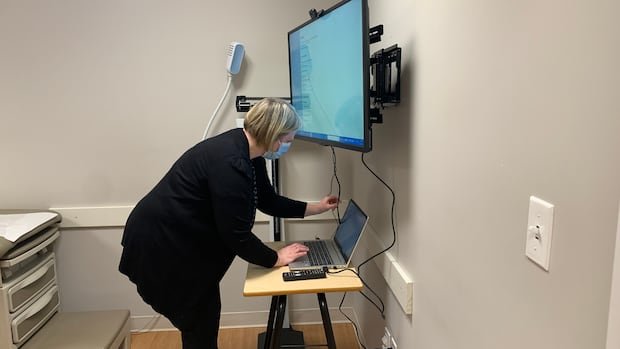

Inquiring about the potential impact on healthcare in small communities, a recent series of suggestions prompts Northwest Territories (N.W.T.) leaders to deliberate on the feasibility of patients engaging in video consultations with medical professionals. While some residents express concerns about the reliance on technology, an expert asserts that incorporating virtual care could enhance healthcare services.
The recommendations stem from an inquiry into the untimely deaths of three individuals from the Dehcho region earlier in 2025, sparking criticism from families and N.W.T. officials who believe the fatalities could have been prevented, highlighting disparities within the healthcare system. In response, in March 2025, Members of the Legislative Assembly (MLAs) passed a motion urging an investigation into the deaths.
Health Minister Lesa Semmler presented the investigator’s recommendations in June, with the Department of Health and Social Services (HSS) maintaining confidentiality over the full report and conclusions. The suggestions call for the N.W.T. health authority to assess virtual diagnostic tools and deploy those that enhance clinicians’ capacity to offer remote assistance.
Jason Sutherland, a health services and policy professor at the University of British Columbia, advocates for in-person care at local health facilities but acknowledges the value of leveraging technology when face-to-face consultations are not feasible. He emphasizes the necessity of reliable internet connectivity, proper equipment, and trained personnel to operate the virtual care system, which could alleviate challenges posed by the national shortage of medical practitioners.
Despite the potential benefits, Dehcho Grand Chief Herb Norwegian voices apprehensions about prioritizing technical proficiency over medical expertise, underscoring the irreplaceable nature of hands-on healthcare. While the N.W.T. Health and Social Services Authority (NTHSSA) offers patients the option for virtual appointments, a 2024 community survey revealed that nearly a third of households in the Dehcho region lacked home internet access at that time.
The outbreak of a respiratory illness in Jean Marie River in January 2025 underscored the reliance on community health workers due to the absence of permanent medical staff in several Dehcho communities. Sutherland notes that virtual care can aid in monitoring chronic conditions and conducting initial assessments of new symptoms but may not be as effective during widespread outbreaks, necessitating physical examinations and specialized tests.
Former N.W.T. health minister Julie Green expresses uncertainty about the effectiveness of virtual healthcare, particularly in areas with limited internet capabilities, but advocates for piloting virtual care initiatives in smaller communities like Nahanni Butte to evaluate their efficacy. As the Health Ministry reviews the recommendations, further updates on the implementation plan are expected in the coming months.