

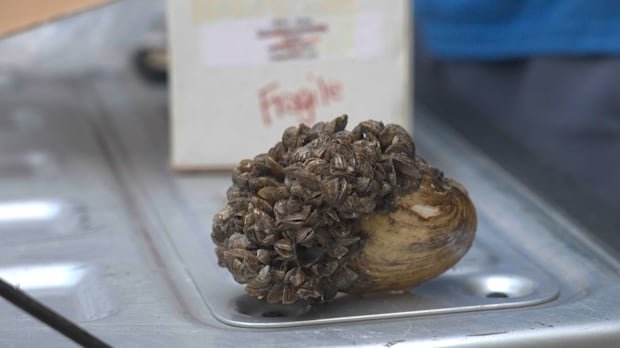

In more water bodies, invasive species like zebra mussels are increasingly being discovered, prompting some residents in northern Manitoba to aim at preventing their spread through education and awareness initiatives.
Zebra mussels have been detected in various locations including Lake Winnipeg, Lake Manitoba, the Red River, Clear Lake, Cedar Lake, and along the Nelson River system. These invasive mussels are transported via watercraft and can survive outside water for up to a week. They obstruct pipes and adhere to rocks, docks, and seaweed.
Chris Smith, a retired biologist from Cranberry Portage, established Citizens for Protecting Our Northern Waterways in 2018. The group conducts awareness campaigns at events, distributes brochures, organizes workshops with local leaders and businesses, and conducts species monitoring in 20 northern lakes.
One of the core messages emphasized by Smith is “clean, drain, dry.” He stresses the importance of preventing the unintentional transfer of zebra mussels between water bodies, highlighting the potential ecological impact of these invasive species on food chains and fish populations.
Efforts to eradicate zebra mussels can be costly and often ineffective, as these mussels reproduce rapidly, with females capable of producing nearly a million eggs annually. The presence of aquatic invasive species is a major concern for communities like Cranberry Portage, which heavily depend on fishing and tourism.
Although no zebra mussels have been reported in Cranberry Portage yet, the community remains vigilant as a single contaminated boat could introduce these invasive species. The area’s reliance on its pristine waterways for recreational and economic activities underscores the importance of proactive measures to prevent the spread of zebra mussels.
Tiffany Anderson, a councillor in the Rural Municipality of Kelsey, expresses concern about the potential devastation zebra mussels could cause if they infest Lake Athapapuskow. The economic implications of dealing with damaged infrastructure due to invasive species could be overwhelming for the community, which boasts several fishing lodges and lakeside cabins.
Local initiatives, such as enforcing boat decontamination measures for visiting fishers, reflect the community’s commitment to safeguarding its water resources and fisheries. Anderson emphasizes the crucial role of monitoring waterways and implementing regulations to protect the region’s natural assets.
Looking ahead, community members are determined to sustain their efforts in preventing the spread of zebra mussels and other invasive species. Education programs, such as those led by Smith’s group, aim to raise awareness about the importance of inspecting watercraft for invasive species before moving to different bodies of water.
Maintaining a proactive approach by taking simple steps like cleaning watercraft thoroughly before relocating to another water body remains crucial in the ongoing battle against invasive species like zebra mussels.