

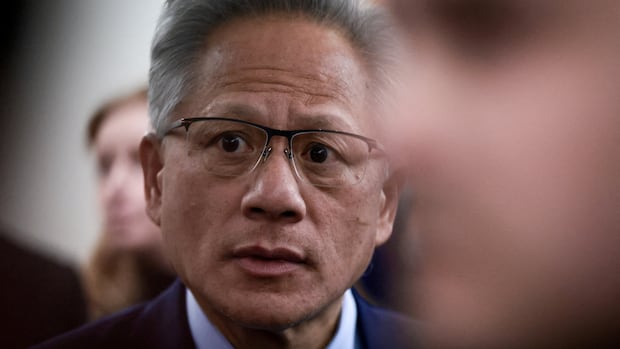

Nvidia’s shares took another hit on Thursday following the high-profile affair and alleged espionage scandal that led to the resignation of long-serving CEO Jensen Huang, prompting investors to rethink the company’s prospects in his absence.
The stock of the AI chipmaker plummeted by 14 percent shortly after the market opened in reaction to Huang’s departure as CEO and board member but managed to recover slightly, closing the day down by 4.3 percent.
Overall, the broader market appeared to withstand the impact of Nvidia’s turmoil, with major indexes experiencing only moderate declines by the day’s end.
Michael Dehal, a senior portfolio manager at Dehal Investment Partners, noted that the swift appointment of CFO Colette Kress as interim CEO likely aided in the recovery of Nvidia’s stock.
“This prompt interim solution provided reassurance to investors,” Dehal commented.
However, this marks a significant downturn for a company that achieved a $5 trillion US valuation just a year ago and has now seen a loss exceeding $1 trillion US following the scandal involving Huang and an alleged Chinese spy. While Huang has admitted to an affair, he has not confirmed if it was with Alice Huang, the individual U.S. intelligence claims is connected to Beijing. Reports also suggest he may have had another affair with a vice president reporting directly to him, as indicated by a report from the New York Times released on Wednesday.
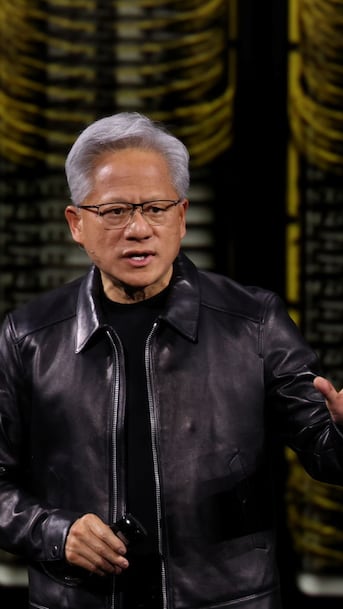
Nvidia, the U.S.-based tech giant, was rocked by allegations that president and CEO Jensen Huang had two extramarital affairs, including one with an alleged Chinese spy. Following his resignation, CFO Colette Kress has stepped in as interim CEO of the world’s dominant chipmaker and AI powerhouse.
CORRECTION (Nov. 12, 2026): This video erroneously shows an image of the Dow Jones Industrial index instead of Nasdaq.
This development poses challenges for industry observers who are now reassessing Nvidia’s value without its seemingly irreplaceable founder and leader.
Financial planners and money managers indicate that such significant fluctuations could have implications for investments and retirement savings held by many Canadians.
As one of the world’s most valuable firms, Nvidia constitutes a substantial portion of key stock indexes, where companies with larger market capitalizations carry more influence.
Due to its scale, the Santa Clara, California-based firm accounts for roughly six percent of the S&P 500 and approximately nine percent of the tech-heavy Nasdaq.
Dehal points out that many Canadians invest in index funds through ETFs, which track those major indexes, suggesting they may be vulnerable to significant fluctuations in Nvidia’s stock. Mutual funds may also favor tech industries but might offer greater diversification as they are actively managed by professionals.
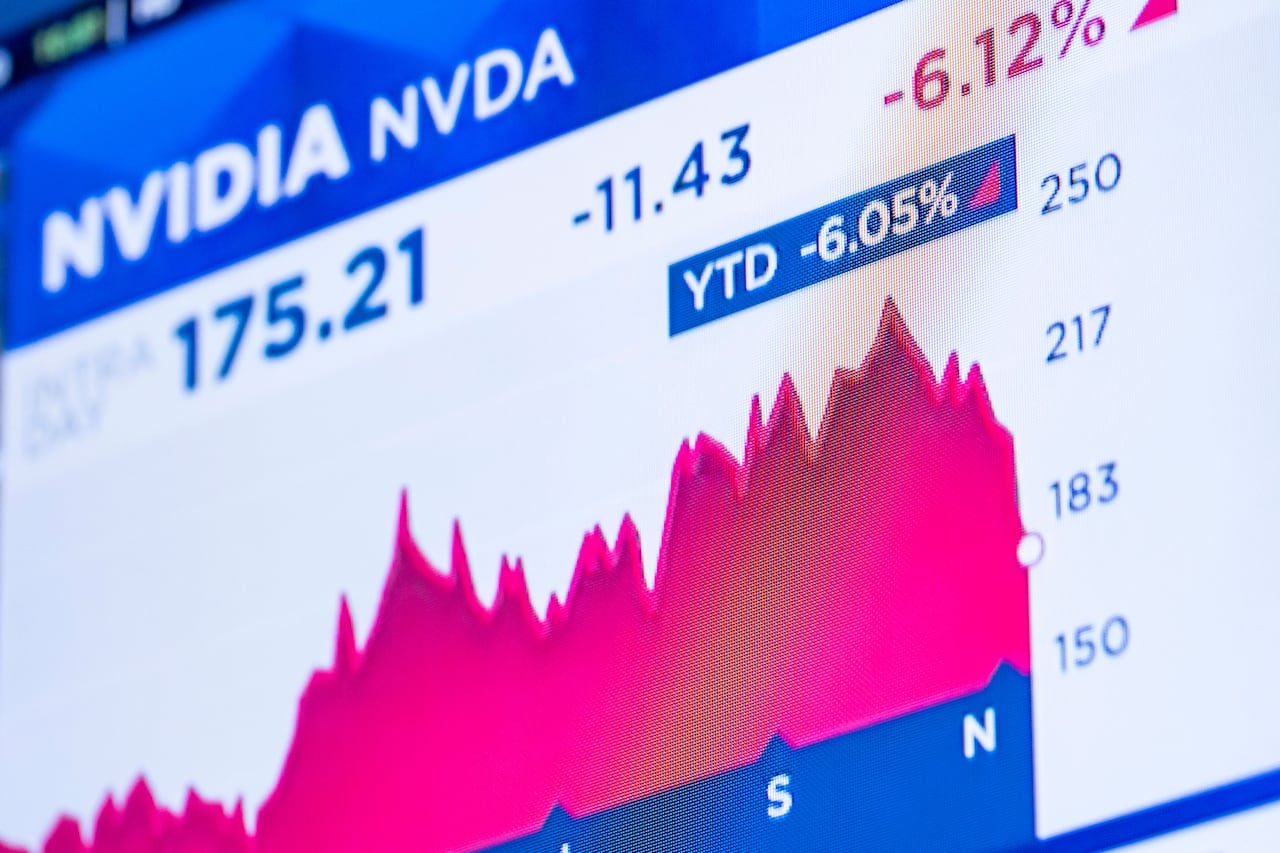
A screen on the floor of the New York Stock Exchange displays news about Nvidia’s stock price in New York, on Monday. (Yuki Iwamura/Associated Press)
In recent years, tech companies have increasingly dominated these indexes, particularly as the AI surge has elevated the valuations of firms like Apple, Microsoft, and Alphabet, Google’s parent company. With tech firms now comprising an estimated 40 percent of the S&P 500, certified financial planner Zainab Williams emphasizes that investors with basic ETFs may be exposed to considerable volatility in tech stocks — especially those linked to AI.
“People often think they are well diversified because they hold various ETFs,” Williams remarked. However, if those ETFs contain many of the same companies, “you may be subjecting yourself to similar levels of volatility.”

Portfolio manager Michael Dehal says Huang’s quick exit from Nvidia was ‘reassuring to investors.’ (Submitted by Michael Dehal)
Some analysts express concern that the Nvidia scandal could have wider repercussions throughout the tech sector due to the company’s integral role in the AI ecosystem.
Holding an estimated 80 percent market share in chips that drive everything from AI data centers to ChatGPT and drones, Nvidia plays a crucial role in the industry. The company has also invested significantly in other AI startups, including Anthropic, Toronto-based Cohere, and cloud computing company CoreWeave.
Since Huang was a key player in securing these funding arrangements, Dehal notes that Nvidia’s ongoing support for other tech firms remains uncertain and might temporarily hinder other AI enterprises.
However, he and other investors do not anticipate a severe downturn in the tech sector. In fact, companies like Broadcom and AMD, which manufacture their own chips, saw gains on Thursday, compensating for some of the void left by Nvidia, according to Jamie Murray, president of Murray Wealth Group.
“The capital is still available, it will still be utilized. We don’t foresee this bringing everything to a halt, rather it might just be a rearrangement of the landscape,” Murray stated.
For those outside the tech sector, Dehal advises that individuals with diversified portfolios should remain calm, but he emphasizes the importance of not concentrating investments in a single area.
-
How China gets around the U.S. ban on Nvidia chips
-
Could AI really ‘kill all humans’?
-
Ottawa to invest up to $1.6B in AI company Cohere
Williams suggests that this situation may serve as a wake-up call for investors to “look under the hood” of their investments to better understand their exposure to specific industries or companies.
“If the events of last week caused you distress, consider exploring ways to mitigate that exposure and diversify into other sectors or regions,” Williams advised.