

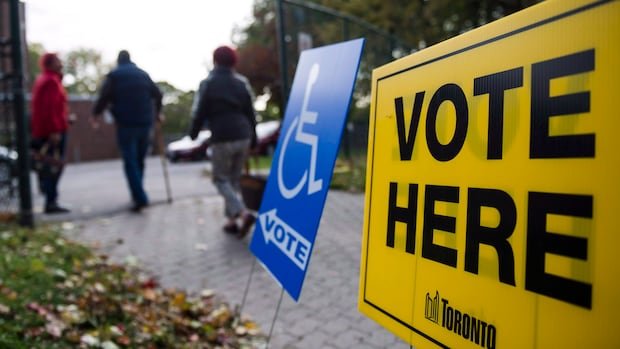

A clearer view of the choices awaiting Ontarians in the upcoming municipal elections is expected to materialize this afternoon as nominations draw to a close. Prospective candidates have until 2 p.m. to enroll for the Oct. 26 election, with early contenders, such as mayoral aspirants in Toronto and Mississauga, already actively promoting their platforms.
Recent days have witnessed a surge in prominent candidates joining the race, including former Liberal MP Nate Erskine-Smith vying for the Beaches—East York ward in Toronto. Concerns have been raised by some political analysts regarding the number of seats with either a single candidate or none at all as the deadline approaches.
Zachary Spicer, an associate professor at York University specializing in public policy, highlights the impact of a competitive mayoral contest on voter participation in municipal elections, usually lower compared to provincial or federal levels. Conversely, a mayoral race with a dominant incumbent and minimal challengers can dampen enthusiasm for council races, leading to reduced voter turnout.
Noteworthy election battles to monitor include Mississauga, which has witnessed heightened mayoral competition in recent years following the era of long-standing mayor Hazel McCallion. Additionally, Hamilton, where incumbent mayor and former provincial NDP leader Andrea Horwath faces significant opposition, and Guelph, Ontario, where the departure of three-term mayor Cam Guthrie has opened up the mayoral race to new contenders, are expected to be intriguing contests.
In Toronto, where established politicians like former federal Conservative minister Chris Alexander and current council member Brad Bradford are challenging incumbent mayor Olivia Chow, a fresh poll indicates residents’ desire for quicker decision-making and a greater receptivity to innovative ideas. The survey, conducted online among approximately 800 adult Torontonians by Ipsos for the Toronto Region Board of Trade, reveals concerns about the city’s decision-making speed, openness to new solutions, infrastructure investment, and economic issues such as cost of living, housing affordability, and traffic congestion.
The polling industry’s professional organization, the Canadian Research Insights Council, notes that online surveys lack a margin of error due to non-random sampling methods.