

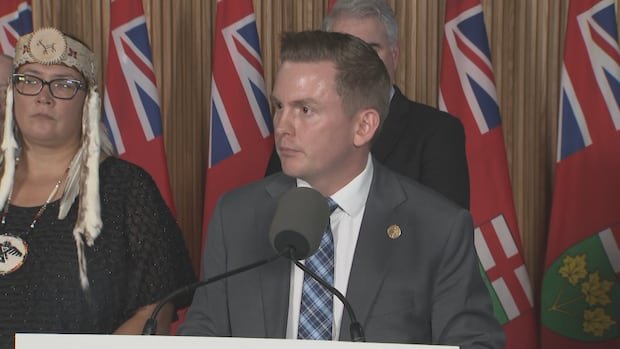

Ontario aims to simplify the process of constructing homes and infrastructure by reducing the time it takes to obtain archaeological approvals, which are necessary when building on potential historical sites or when artifacts or remains are discovered on properties.
Minister of Citizenship and Multiculturalism Graham McGregor revealed on Tuesday that the province is suggesting legislative adjustments that could slash approval timelines by up to 80% and enhance the capacity for building homes and infrastructure by 45%.
Some projects have faced delays of years for archaeology assessments, Minister Graham McGregor informed reporters during a news conference, stating, “Ontario’s growth is driving increased demand for new homes and infrastructure provincewide.” He added, “This will result in a more streamlined, transparent, and predictable archaeology process.”
Since 1983, Ontario’s archaeological system has relied on professional judgment and independent expertise. However, last year’s Bill 5 amendments to the Ontario Heritage Act disrupted this framework, shifting towards a model where elected officials can influence heritage decisions behind closed doors.
The proposed changes by the province include expediting approval for low-risk, small-scale projects, implementing stricter oversight and accountability through a new enforcement strategy involving guidance, training, inspections, and compliance orders, and introducing advanced digital tools to replace outdated systems, McGregor detailed.
These changes will be rolled out in phases, commencing in early 2027, as per a news release on Tuesday.
McGregor indicated that these developments build upon the initiatives taken earlier this year by the Ministry of Citizenship and Multiculturalism. Currently, 80% of archaeological approvals are processed within as little as 10 days.
Furthermore, following extensive consultations with Indigenous communities, Grand Council Chief Linda Debassige mentioned that the Anishinabek Nation signed a bilateral table agreement with the ministry. However, she emphasized the need for ongoing efforts to prevent incidents like the historic Ipperwash crisis from recurring.
In 1995, a tragic land dispute resulting in the fatal police shooting of Dudley George occurred on land that included a sacred burial site expropriated from the Stony Point First Nation in 1942. Debassige expressed concerns about Ontario’s past actions regarding development on First Nations burial grounds, highlighting the importance of acknowledging and preserving the land’s history.
She stressed the necessity of supporting Ontarians encountering remains or artifacts during property construction or renovation, noting that assessments can be costly. Debassige underscored the significance of respecting the land’s history and not turning a blind eye to archaeological findings.
When asked about financial assistance for homeowners facing substantial expenses due to archaeological discoveries, McGregor clarified that such aid is not part of the proposed changes.
Scott Andison, chief executive officer of the Ontario Home Builders’ Association, emphasized the importance of cutting bureaucratic hurdles to control costs and expedite the homebuilding process. He highlighted the need to balance the imperative of constructing homes with Indigenous rights and heritage preservation in Ontario.
Paul Racher, a managing principal at Ontario’s premier heritage consulting firm, Archaeological Research Associates Ltd., acknowledged past destruction of archaeological sites but expressed optimism about progress through collaboration with Indigenous communities. He described archaeology as a privilege that offers a profound connection to the past.
Overall, the proposed legislative changes in Ontario aim to foster a more efficient and balanced approach to archaeological approvals, benefiting both development projects and heritage preservation efforts.