

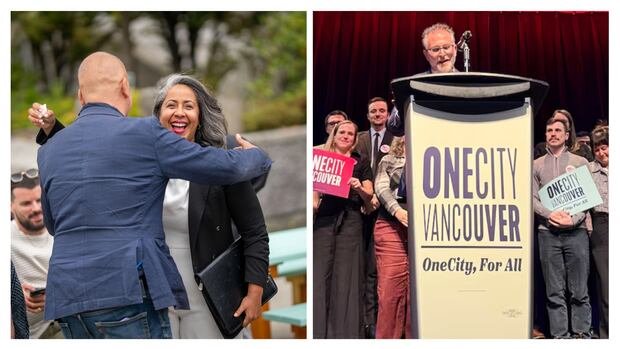

Battles among local factions identifying as “left-wing” or “progressive” have long influenced Vancouver’s political landscape and may do so again in the coming week. Stephanie Allen, who withdrew as the Coalition of Progressive Electors (COPE) mayoral candidate, emphasized the importance of uniting behind a single progressive mayor for Vancouver.
In a rare agreement in April, Vancouver’s three self-proclaimed “progressive” parties, COPE, the Greens, and OneCity, committed to jointly selecting council candidates and determining the most suitable progressive mayoral candidate to challenge Ken Sim and ABC Vancouver in October.
With the deadline for Vancouver’s election ballot approaching on September 11, Allen’s decision to step down, citing her low poll numbers, has left Pete Fry of the Green Party and William Azaroff of OneCity as the remaining candidates under the agreement.
Fry and Azaroff have differing strategies on defeating Ken Sim. Fry asserts his electability based on polling and name recognition, highlighting his track record and opposition to Sim. On the other hand, Azaroff emphasizes OneCity’s financial strength and organizational capabilities for a successful campaign against Sim.
While OneCity has raised more funds and boasts organizational prowess, they have yet to surpass five percent in public polls over the past year. This disparity raises questions about OneCity’s ability to garner widespread support.
The debate over the candidacy continues as Azaroff faces pressure to step down, with uncertainties about how many of his supporters would shift their votes to Fry. Critics of Fry argue that he lacks bold stances on critical issues like housing, unlike OneCity’s platform.
As the mayoral race intensifies, the contrasting viewpoints between Fry and Azaroff may hinder efforts to consolidate support behind a single progressive candidate. Meetings between the candidates are scheduled, but the divergence in their approaches poses challenges to achieving unity within the progressive camp in Vancouver.