

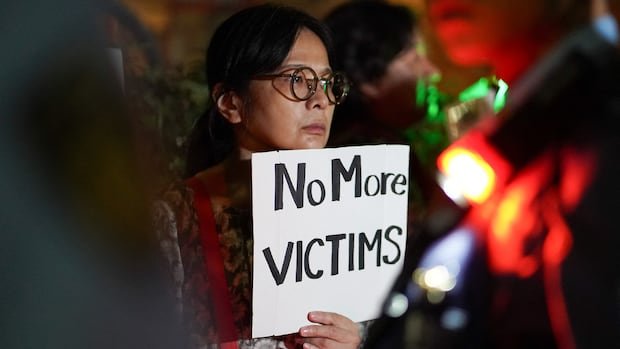

In Okinawa, Japan, 24-year-old Sorane Sakihama grew up hearing accounts of crimes committed against Japanese women by U.S. soldiers stationed in the area. When a U.S. Marine was recently apprehended on suspicion of robbing and killing a local woman in Naha, the island’s capital, Sakihama felt compelled to take action.
Organizing a protest outside the U.S. embassy in Tokyo, Sakihama joined hundreds of demonstrators demanding justice and the removal of U.S. military bases from Okinawa. This protest was part of a series of demonstrations held across Japan this week, including one in Naha where approximately 160 individuals gathered, advocating for the expulsion of U.S. bases from the island.
The suspect, Lance Cpl. Devin Jacob Ballard, stationed at Futenma Air Station, was arrested by Okinawa police for allegedly strangling Anna Yagi, 39, and stealing her belongings. Despite Ballard denying the accusations, the incident has triggered outrage and reignited tensions surrounding the presence of U.S. military facilities in Okinawa.
Okinawa, which housed 70% of U.S. military installations in Japan and accommodates 18,000 U.S. Marines, has a history of discontent with the military presence due to issues such as noise, pollution, and violent incidents. Sakihama, reflecting on her grandparents’ experiences during World War II, emphasized the desire for autonomy and the negative impact of the ongoing military presence.
Following the recent tragedy, Okinawa Governor Genta Koja criticized the past ineffectiveness of disciplinary actions taken by the U.S. military after similar offenses and expressed outrage at the situation. While the U.S. embassy and Marine Corps extended condolences and pledged cooperation with Japanese authorities, Sakihama remains skeptical about any substantial changes to the status quo.
Despite calls for increased collaboration between Japanese and U.S. military forces, particularly in light of regional security concerns, the sentiment among many Okinawans remains one of skepticism regarding the effectiveness of such measures. As the legal process unfolds, with Japanese prosecutors set to determine formal charges, the future of U.S. military presence in Okinawa hangs in the balance, while the community continues to seek justice and accountability.