

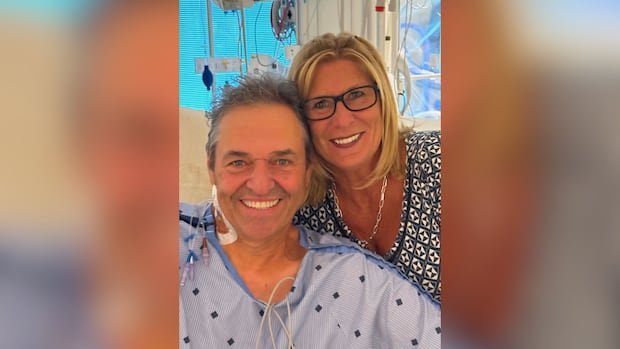

A 64-year-old man from Quebec has made history in North America by being the first recipient of a regenerated liver through an innovative technology. This breakthrough is anticipated to increase the availability of transplantable livers by a significant number in its initial year of implementation. Gérard Landry, residing in Nouvelle on Quebec’s Gaspé Peninsula, battled liver issues for over a decade, leading to cirrhosis and liver cancer.
Prior to his liver transplant surgery at the Centre hospitalier de l’Université de Montréal (CHUM) in Montreal, Landry was informed by his physician about the use of a novel machine that regenerated the liver, a development that was akin to a precious gift for him. The technology, known as Liver Assist, enables medical professionals to treat and evaluate a donated liver externally before transplantation, thereby enhancing the viability of livers that may have been deemed unsuitable otherwise.
Dr. David Hénault, a liver transplant expert at CHUM, spearheaded the project and supervised Landry’s surgery. The Liver Assist system functions by connecting a donated liver to a device that circulates an oxygen-rich fluid through the organ, potentially reversing damage caused by oxygen deprivation while the liver is outside the body. The technology allows for a seamless transition to a blood-based solution to assess liver functionality under conditions resembling the human body.
The implementation of Liver Assist has the potential to substantially increase the pool of available livers for transplantation, with estimates suggesting an additional 20 to 24 livers could be made available for transplant in the first year alone. Besides expanding the availability of organs, this technology has shown promise in reducing complications, reoperations, and hospitalization durations for suitable candidates.
In Landry’s case, the success of the transplant was evident early on, with improved blood test results the day after the procedure surpassing expectations. Dr. Hénault attributed the positive outcome partly to the assistance provided by the new technology. Landry, who is currently recuperating in Montreal and undergoing regular blood tests, looks forward to returning to Gaspésie to continue his recovery and reunite with his loved ones.
Furthermore, Landry hopes that his experience will inspire discussions about organ donation, emphasizing the critical importance of donated organs in saving lives. As he aptly puts it, advanced technology alone cannot suffice if there is a scarcity of available organs. Landry’s journey serves as a beacon of hope and underscores the transformative impact of medical advancements in the field of organ transplantation.