

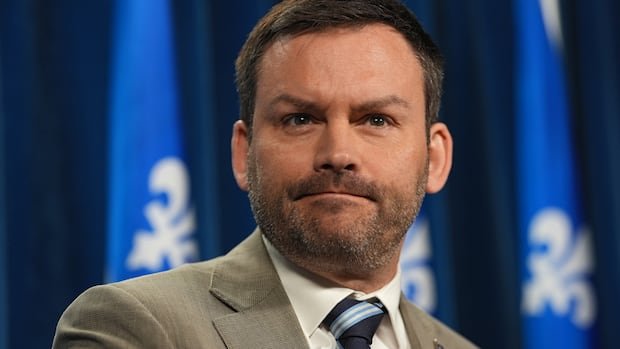

Quebec premier-designate Paul St-Pierre Plamondon has formally requested the province’s lieutenant-governor to refrain from attending his new cabinet’s swearing-in ceremony on Wednesday. In a letter addressed to Lt.-Gov. Manon Jeannotte on Monday, the Parti Québécois leader emphasized that his incoming government will not permit a representative of the British Crown to oversee the event.
St-Pierre Plamondon explicitly stated the intention to eliminate the monarchy in Quebec from both democratic institutions and civil society. He specified that he prefers the lieutenant-governor to sign the necessary appointment documents privately, enabling the Secretary General to administer the oaths without her presence. This approach, as outlined by the PQ leader, aims to expedite the commencement of the newly appointed ministers’ responsibilities.
Expressing gratitude in advance for cooperation, St-Pierre Plamondon emphasized the importance of ensuring a smooth and respectful execution of the ceremony in alignment with the elected members’ wishes from the National Assembly of Quebec. However, the new government’s anti-monarchy stance encounters immediate legal opposition.
A lawyer challenging the 2022 Quebec law that rendered the mandatory allegiance oath to the King optional for elected officials revealed plans to seek an emergency injunction in court on Tuesday. Lawrence David, the lawyer, anticipates a prompt ruling from Judge Ian Demers, with a commitment to appeal if the judgment is unfavorable.
The legal dispute arises following the recent provincial election that granted the Parti Québécois a minority government. St-Pierre Plamondon reiterated his refusal to swear allegiance to King Charles III, potentially leading to legal implications for MNAs who decline to take the oath when the legislature reconvenes in November.
At the core of the legal battle lies the argument that Quebec unilaterally modified the 1867 Constitution Act without the requisite unanimous consent, raising concerns about the law’s compliance with Section 3 of the Canadian Charter of Rights and Freedoms. David has signaled readiness to pursue further legal action if the new government attempts to unilaterally abolish the lieutenant-governor’s office.