

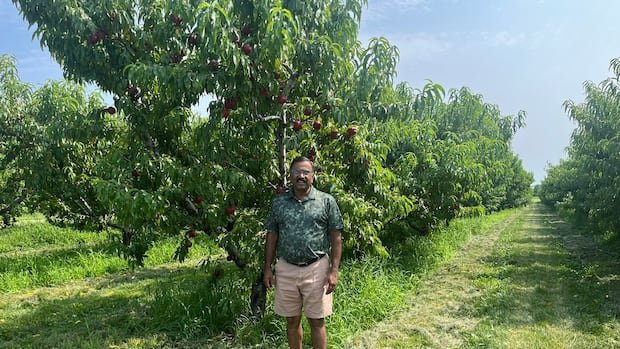

Recent heavy rainfall in Ontario’s Niagara region not only caused extensive flooding and strained sewage systems but also posed a significant threat to the area’s peach industry. Peach and other delicate fruit trees, such as nectarines and cherries, are vulnerable to excess water, leading to potential root damage and tree mortality.
The series of storms that hit the region from July 21 to August 2 are expected to have a negative impact on peach trees, with Jay Subramanian, a tree fruit breeding and biotechnology expert at the University of Guelph, confirming potential tree losses ranging from 20% to 40%. The effects may not be immediately apparent, as it could take weeks or months for the full extent of damage to become evident.
While the upcoming Winona Peach Festival in Hamilton’s Winona community assured that their peach supply remains unaffected by the flooding, local peach trees, including those at Subramanian’s research farm in Vineland, are already showing signs of distress. If the damage is severe, consumers may experience higher prices for peaches and possibly wine next summer, as grapevines in the region have also suffered from water saturation.
The changing climate in Niagara presents various challenges to the fruit industry, with earlier ripening times affecting fruit quality and susceptibility to pests. Subramanian emphasized the importance of breeding climate-resilient fruit varieties to adapt to these environmental shifts, stressing the need for increased urgency in addressing these issues. Despite dwindling government support for research in this area, efforts to develop resilient fruit varieties are crucial to maintaining the quality and availability of locally grown produce.