

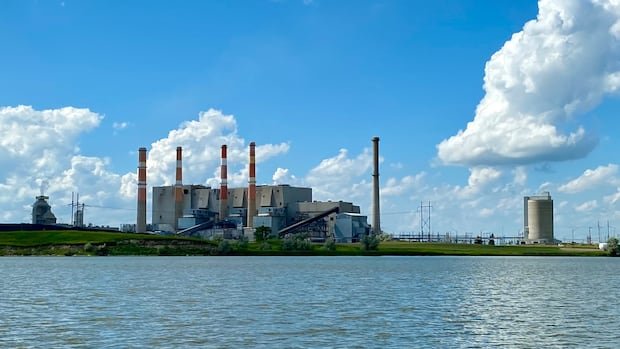

A recent analysis indicates that the decision by the Saskatchewan government to renovate its coal-fired power plants may result in a cost of up to $46.4 billion over the next two decades. This figure surpasses the previously leaked internal SaskPower documents estimate of $26 billion over 25 years. Brett Dolter, an associate professor at the University of Regina specializing in economics, conducted the analysis to assess the expense of Saskatchewan’s strategy to transition from coal-fired power plants to nuclear power and the implementation of Small Modular Reactors (SMRs).
Dolter’s study reveals that the current plan is not only more costly but also more environmentally damaging compared to retiring the coal plants and adopting a mix of natural gas facilities and renewable energy systems, which was the initial provincial strategy before its reversal in early 2025. Dolter emphasizes that transitioning to natural gas and renewables could save money, reduce emissions, and lead to individual savings of over $800 annually.
Moreover, Dolter utilized leaked SaskPower documents, submissions to the province’s rate review panel, and certain assumptions due to the government’s non-disclosure of its internal analysis. He highlights that the financial benefits become more apparent when factoring in carbon pricing. Without carbon pricing for heavy emitters, the expense of persisting with coal-fired power would amount to $30.2 billion over the next 20 years.
Incorporating carbon pricing into the equation, the projected cost escalates to $46.4 billion, as per Dolter’s calculation based on Ottawa’s memorandum of understanding with Alberta earlier this year. Dolter emphasizes the significant impact of pollution from coal plants on carbon pricing expenses, making it a costly endeavor.
While the financial implications of Saskatchewan’s current course are clear, Dolter refrains from speculating on the government’s rationale for choosing this path despite the known costs. The Provincial Government declined to provide a response to Dolter’s analysis, reiterating its commitment to ensuring reliable and affordable electricity to support Saskatchewan’s ongoing development.
SaskPower’s submission to the rate review panel indicated potential savings of “more than $21 billion” by extending the life of coal plants instead of complying with clean electricity regulations. The decision to refurbish the coal-fired plants was made in early 2025, pivoting from the province’s previous trajectory towards a coal-free future. This shift was marked by a significant financial investment to aid communities like Estevan and Coronach in transitioning away from coal reliance.
Mayor Tony Sernick of Estevan expressed relief over the government’s decision, citing the potential loss of a third of the city’s population had the coal plants been shut down. The decision to revamp the coal plants has injected optimism into the city’s outlook, with preparations underway for future developments.
The move to prolong coal reliance contradicts Canada’s long-standing plan to phase out coal-fired power generation, dating back to regulations enacted in 2012 and further reinforced in 2016. Minister Harrison’s rejection of federal regulations regarding clean electricity and coal-fired power raises legal concerns and potential financial risks for Saskatchewan. Dolter warns that defying these regulations could result in substantial financial losses if legal challenges force the closure of the refurbished coal plants after significant investment.