

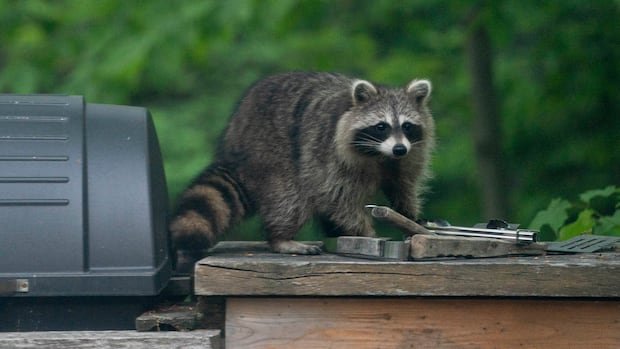

A second cat in Saint-Anicet, Que, has tested positive for raccoon rabies this summer, leading to three individuals seeking preventive care after exposure to the infected animal, as reported by Santé Québec Montérégie-Centre. This incident follows the recent diagnosis of a cat with rabies in Godmanchester, also located in the Montérégie region. The occurrence underscores the importance of maintaining pets’ vaccinations up to date as raccoon rabies continues to spread across Estrie, Montérégie, and Centre-du-Québec.
Health authorities advise pet owners to keep their animals indoors under supervision to prevent roaming freely outside. It is crucial to avoid any contact with unfamiliar domestic or wild animals, regardless of their appearance or health status. If there is a suspicion of exposure to a potentially rabid animal, it is recommended to wash the affected area thoroughly for 10 to 15 minutes and contact Info-Santé at 811 promptly for immediate medical attention. Early preventive treatment is vital in preventing the disease from developing.
Animals infected with rabies may exhibit behavioral changes, aggression, biting tendencies, isolation, reduced appetite, excessive salivation, or unsteady movements. If a pet displays these symptoms, it should be isolated and examined by a veterinarian to minimize contact with other animals and humans.
The Environment Ministry recently confirmed the first case of raccoon rabies in the Centre-du-Québec region in Saint-Eugène-de-Grantham. Residents in the Eastern Townships, Montérégie, and Centre-du-Québec are encouraged to report any dead, injured, disoriented, paralyzed, or unusually aggressive raccoons, skunks, or foxes through an online form. Individuals outside these regions can report potentially rabid wild animals by contacting the Environment Ministry at 1 877 346-6763.