

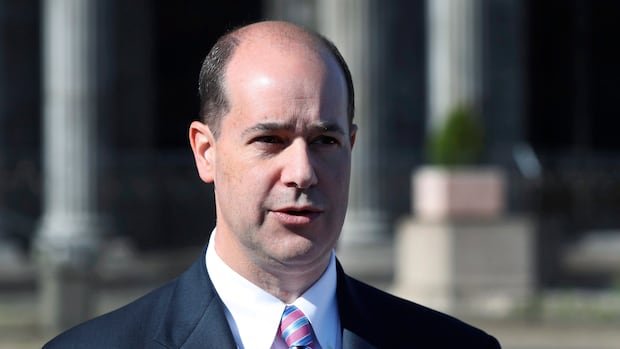

The owner of the Ambassador Bridge in the United States, Matthew Moroun, requested a meeting with high-ranking Canadian government officials regarding the upcoming Gordie Howe International Bridge months before its opening. However, details of the discussions during the meeting remain largely undisclosed.
Documents obtained under the Access to Information Act revealed that the meeting took place on April 7. Moroun, accompanied by Kevin Kalczynski and Brennan Lee, met with Canadian officials including Paul Halucha, Marco Presutti, and Jesse Tracey from Housing Infrastructure and Communities Canada.
While Moroun initiated the meeting, significant portions of the agenda and the government’s account of the meeting were redacted. The purpose and outcomes of the meeting were not disclosed by the Ambassador Bridge when contacted by CBC News.
The Gordie Howe International Bridge was expected to divert a substantial portion of traffic from the Ambassador Bridge, impacting Moroun’s financial interests significantly. The Ambassador Bridge is a crucial trade route handling over $140 billion in merchandise trade in 2021, representing a substantial portion of Canada’s exports by road.
The Canadian government was under pressure to expedite the opening of the $6.4 billion Gordie Howe bridge, leading to discussions with private bridge owners like Moroun. The private-public dynamic at play raised concerns about transparency and diplomatic relations between Canada and the U.S.
After the meeting, the competitive landscape changed with the Ambassador Bridge announcing toll rate reductions for some users, positioning them slightly below those planned for the Gordie Howe bridge. This shift highlighted the evolving strategies in response to the new publicly owned competition.
The Moroun family has long protected the Ambassador Bridge from competing crossings, utilizing strategic land acquisitions and legal challenges. Their alignment with the Trump administration’s “America First” approach, despite potential trade disruptions, reflects a complex interplay of private interests and political dynamics.
The involvement of a private owner in an international border crossing presents unique challenges and opportunities, shaping the future of cross-border trade in the region.