

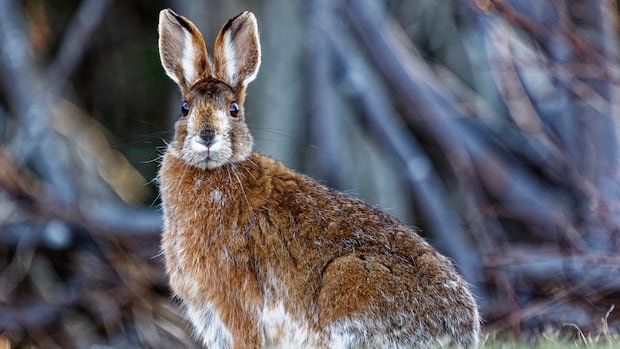

Snowshoe hares have become more prevalent on Prince Edward Island following post-tropical storm Fiona, according to a provincial wildlife biologist. Garry Gregory from P.E.I.’s fish and wildlife division noted an increase in observations of these animals, often mistaken for rabbits by Islanders. He clarified that the creatures being spotted are actually snowshoe hares, which are indigenous to the province.
While formal tracking data is lacking to confirm a rise in the snowshoe hare population, Gregory suggested that alterations to the landscape post-Fiona make it plausible that their numbers have grown. The storm aftermath left dense debris in forests and woodlots across the island, providing ideal escape cover for hares. This cover increase enhances their survival rates, potentially leading to a population boost.
The storm’s impact also benefited hares by promoting new plant growth essential for their winter diet. The felled trees allowed sunlight to reach the forest floor, facilitating the growth of plants like willows, grey birch, maples, and pin cherry, crucial food sources for snowshoe hares during colder months.
Moreover, the altered habitat benefits other wildlife species such as songbirds and American woodcock. Despite the rise in hare population, predator numbers on P.E.I. are not necessarily increasing, as predators in the region have diverse diets beyond just snowshoe hares.
Gregory advised Islanders not to feed the hares they encounter in their yards, as it is unnecessary and could lead to potential conflicts with pets. He also addressed concerns about ticks on hares, stating that while it is common to spot ticks on these animals, the species found on hares are not the ones associated with Lyme disease and generally do not pose significant health risks unless infestation is severe.