

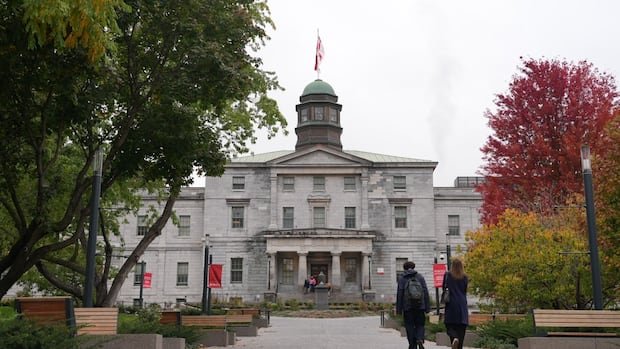

Students at McGill University’s law faculty are expressing worry over a convicted murderer’s presence on campus and participation in faculty activities. The individual in question, Jeffrey George Ewert, was found guilty of second-degree murder and attempted murder in 1984 for two violent incidents. Ewert’s criminal history includes sexually assaulting and killing a woman, as well as severely injuring a 15-year-old, leaving her paralyzed. Despite serving a life sentence, Ewert has been granted day parole since 2025 and has been attending law classes and faculty events at McGill.
While Ewert’s risk of reoffending is deemed moderate to high by clinical assessments, parole documents indicate that with close supervision and clinical follow-up, his risk falls into the moderate category. Although his case management team did not view him as a significant threat to society, the parole board expressed concerns regarding his interactions with and attitudes towards women.
Several students, who preferred to remain anonymous, approached CBC after learning about Ewert’s criminal past and expressed disappointment that the university did not disclose this information. They highlighted the lack of transparency and the potential risks posed by Ewert’s presence, especially to the predominantly female student body.
McGill University, when questioned by CBC, declined to comment specifically on Ewert’s case due to privacy laws. However, the university emphasized that criminal background checks are not standard in Canadian university admissions processes. McGill assured that it would take swift action upon receiving concerning information about a student’s background or behavior on campus to maintain a safe environment. The university also pledged to collaborate with relevant authorities and review its admissions procedures to prevent similar incidents in the future.
The students who voiced their concerns to CBC reported that they had not seen Ewert on campus since October 6. While Ewert declined an interview, his lawyer confirmed his absence from McGill and stressed that the university was aware of his history and status. Demnati, Ewert’s lawyer, highlighted his honesty regarding his past and emphasized his efforts towards rehabilitation.
Ewert’s day parole extension includes several conditions, such as restrictions on entering drinking establishments and reporting all relationships with women. The parole board added stringent conditions due to Ewert’s online activities, including viewing women’s profiles and engaging in discussions without notifying his case management team. Concerns were raised about the university’s ability to monitor such conditions, especially in academic settings where interactions with students and teaching assistants occur.
While some students expressed unease about Ewert’s presence, others who interacted with him shared positive experiences, lauding his determination to improve his life. The supportive students acknowledged Ewert’s past but emphasized feeling safe and respected in his company.
The complexities of Ewert’s case highlight the challenges of offender reintegration. Despite his troubling past, Ewert and his lawyer advocate for a chance at rehabilitation and stress the importance of societal acceptance and support for ex-convicts. The evolving nature of Ewert’s parole conditions and online activities raise questions about monitoring and managing potential risks in educational environments.
In conclusion, the case of Jeffrey George Ewert at McGill University underscores the nuances of rehabilitation, community safety, and the need for transparent communication in academic settings.