

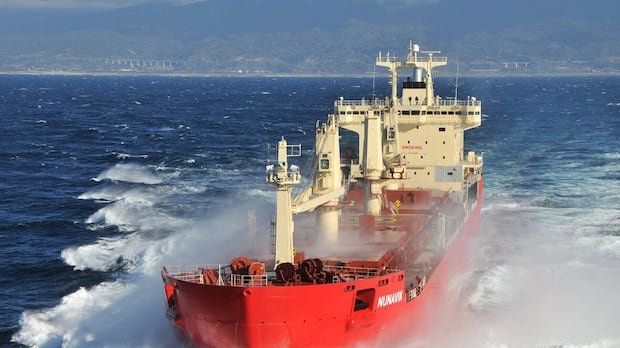

A set of research studies indicates that ice-hardened freighters can safely voyage through Hudson Bay beyond the current four-month Port of Churchill shipping season. However, the studies caution that ice will persist in the bay and present challenges in the upcoming decades, even in the face of pessimistic global warming scenarios.
Commissioned to explore the possibility of extending the Port of Churchill’s shipping season, the studies highlight the ongoing variability of ice conditions from year to year. This variability will impact the thickness of ice in Hudson Bay and the necessary vessels for navigation, introducing uncertainties.
Specifically, one study raises concerns about the ability of ice-hardened vessels carrying full loads of liquid natural gas to maneuver the mouth of the Churchill River. These findings aim to equip the government of Manitoba with insights as it seeks to attract investors for an extensive project to enhance the Port of Churchill and upgrade the Hudson Bay Railway.
Arctic Gateway Group, in collaboration with shipping company Fednav, conducted the studies to determine the requirements for achieving year-round shipping operations at the Port of Churchill. The research concludes that utilizing ice-hardened freighters could extend the shipping season currently and potentially enable year-round access in the future.
Fednav, however, underscores the dynamic nature of Hudson Bay’s ice environment and the difficulties associated with navigating the shallow and narrow approach to the Port of Churchill within the Hudson Bay estuary. The company suggests that field studies, probe voyages, and simulation-based assessments are essential to address uncertainties and guide decisions on extending the shipping season or implementing year-round operations.
According to the Arctic Research Foundation, the estimated cost of acquiring the third and fourth toughest classes of ice-hardened vessels ranges from $100 million to $410 million. These costs are notably lower than those of multibillion-dollar icebreakers designed for traversing the thickest multi-year ice in the Arctic Ocean.
Fednav emphasizes that existing depth limitations along the approach shoal, within the estuary, and near the berths are inadequate for vessels of the third-toughest class, necessitating significant dredging, infrastructure adjustments, or the development of an offshore loading facility before such vessels can operate at Churchill.
A separate study led by a group of academics, including sea ice expert Feiyue Wang from the University of Manitoba, predicts the persistence of ice in Hudson Bay even if the average global temperature rises by five degrees Celsius above pre-industrial levels by the end of this century. Current projections from atmospheric scientists anticipate a 3.4-degree Celsius increase within the same timeframe.