

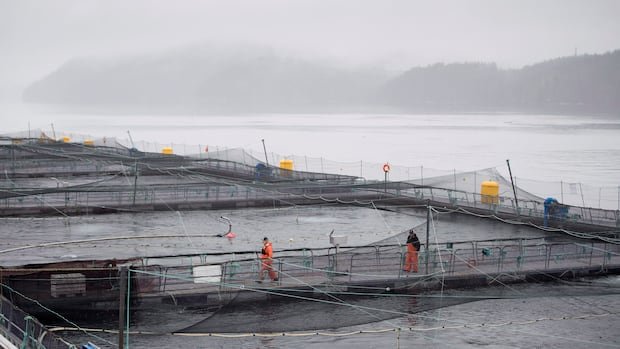

A recent study by the Pacific Salmon Foundation revealed that viral heart disease, specifically heart and skeletal muscle inflammation (HSMI), is more prevalent in open-net salmon farms in British Columbia than previously acknowledged. The research, published in the Aquaculture journal, identified HSMI in five out of seven open-net pen salmon farms located in the Broughton Archipelago, an island group near Port McNeill on Vancouver Island. The study also highlighted the potential transmission of the disease-causing virus, piscine orthoreovirus (PRV), to wild fish in the surrounding waters.
Lead author Emiliano Di Cicco emphasized that the incidence of the disease is higher than previously believed, contradicting earlier assumptions. This study builds on previous research conducted in 2017, which initially detected the disease in one out of four farms studied at the time. Di Cicco stressed the importance of reevaluating the classification of PRV as non-pathogenic by the Department of Fisheries and Oceans (DFO) in British Columbia, urging for its reclassification as a pathogenic virus to align with global standards.
The study involved examining 749 salmon across the farms, with approximately seven percent showing signs of HSMI. While past uncertainties existed regarding the role of PRV in causing HSMI, recent experiments by Norwegian researchers have established a clear link. Infected Pacific salmon may experience various health issues, including anemia, inflamed hearts, liver and kidney damage, and jaundice.
Di Cicco called for a revision of the current diagnostic criteria for HSMI, advocating for a more comprehensive approach that considers the chronic nature of the disease. Despite the ongoing debates surrounding open-net fish farms and disease transfer risks to wild salmon, DFO stated its intent to review the study findings and incorporate them into future assessments.
The B.C. Salmon Farmers Association has not yet responded to requests for comment regarding the study’s results. Industry groups defending salmon farming in British Columbia underscore the economic significance of the sector, providing well-paying jobs and constituting a substantial portion of Canada’s salmon production.
In a collaborative effort with the Mamalilikulla, ʼNa̱mǥis, and Ḵwiḵwa̱sut’inux̱w Ha̱xwa’mis First Nations, the study sheds light on the longstanding concerns of coastal Indigenous communities regarding salmon health and environmental impacts. Indigenous leaders, such as Rick Johnson and Don Svanik, emphasized the cultural and ecological importance of salmon, advocating for stronger conservation measures and the protection of wild salmon populations.