

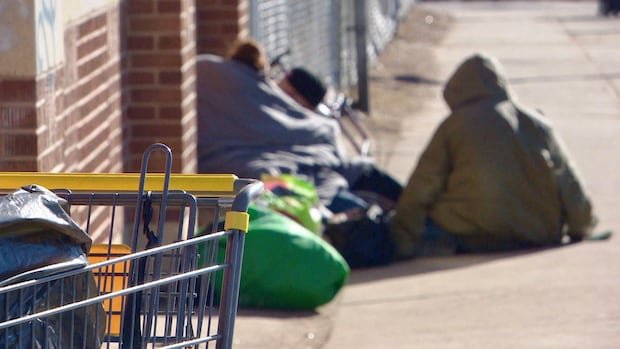

In the ongoing 2026 municipal campaign in Greater Sudbury, homelessness and housing have taken center stage, with the new mayor and council facing a pressing deadline to address the issue. The council had previously endorsed a plan aimed at eliminating homelessness, setting a target to ensure that homelessness becomes a temporary and infrequent occurrence in the city by 2030. This responsibility falls on the shoulders of the mayor and council elected on October 26.
According to Jaclyn Seeler, the director of housing services and homelessness for the city, there has been a steady rise in homelessness in Sudbury every year. Recent data from the city’s website reveals that as of September this year, 323 individuals are chronically unhoused, compared to 282 in the same period last year. Additionally, the website reports 187 people living in encampments throughout the city, with many located in the approved area on city property at Energy Court in the downtown area.
Despite these challenges, Seeler remains optimistic about reducing these numbers by following the outlined strategy in the homelessness elimination plan. Notably, the LOTUS program at Lorraine Street, which offers no-barrier housing with 40 units and round-the-clock support, has successfully transitioned six individuals into stable housing this year.
A recent boost in funding, amounting to $2.4 million, has been announced to facilitate housing for a significant number of individuals in immediate need through the Homeless Reduction Innovation Fund. This funding will be allocated to two programs aimed at reducing the unsheltered population by 10 percent, focusing on chronically homeless individuals with complex needs at Energy Court and older adults with medical vulnerabilities.
Various mayoral candidates have differing opinions on the Energy Court encampment, with some advocating for its removal and others proposing alternative solutions. As the city approaches 2030, Seeler expresses confidence in Sudbury’s ability to achieve its homelessness eradication goal through dedication to the established roadmap.
Efforts by partnering agencies, such as Monarch Recovery Services, the Canadian Mental Health Association, and Shkagamik-kwe Health Centre, are crucial in providing housing solutions and support services. These organizations manage 48 apartments supported by rent supplements and case managers through the Ontario Ministry of Health. Roxane Zuck, CEO of Monarch Recovery Services, highlights the need for collaboration with private developers to secure safe housing options in the community.
Advocates like Amy Collins from the Elizabeth Fry Society of Northeastern Ontario emphasize the importance of community acceptance in implementing effective housing strategies. Collins stresses the need for more supportive housing and 24/7 shelters, underlining that community support is essential for their success.
Furthermore, Cristina Scarpellini, founder of Angels of Hope against Human Trafficking, highlights the critical need for safe housing for individuals seeking to exit the sex trade, emphasizing the vulnerability of these individuals, particularly during harsh weather conditions. Scarpellini is working on a proposal for a safe house and seeks funding partnerships with government entities to address this pressing issue.
While progress is being made, there is still much work to be done to combat homelessness and housing challenges in Greater Sudbury. It is evident that community involvement, funding support, and innovative housing solutions will play key roles in achieving the city’s goal of ending homelessness by 2030.