

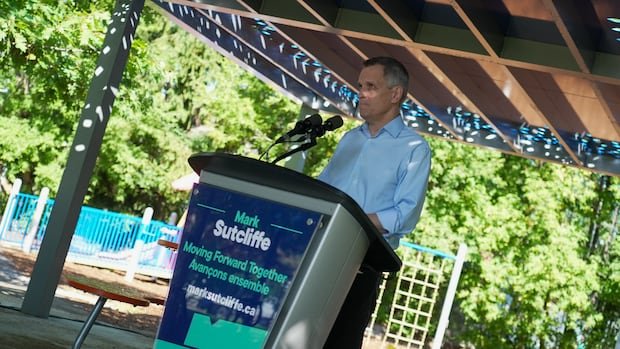

Mark Sutcliffe is vowing to increase police resources, swiftly clear homeless encampments, and appoint a “downtown safety czar” if re-elected for a second term as mayor. Sutcliffe unveiled his public safety strategy at Fisher Park, emphasizing the need to balance compassion and enforcement to address a growing sense of insecurity in Ottawa.
Acknowledging the community’s concerns, Sutcliffe stated, “You deserve to feel safe in your community.” He noted a noticeable shift in the perception of safety among residents over the past few years, both in neighborhoods and downtown areas.
If re-elected, Sutcliffe, who has served as mayor since 2022, plans to add 200 police officers, 100 paramedics, and 50 firefighters. He aims to allocate more police resources to critical areas like gun and gang violence, intimate partner conflicts, and hate crimes.
While Sutcliffe outlined his proposals, the specifics of how these plans will be implemented remain unclear. City council oversees paramedics and fire services and approves the police budget but does not determine police staffing or operations, roles assigned to the police chief and civilian police services board.
Sutcliffe emphasized his experience collaborating with law enforcement and the police board, expressing confidence that they would align with his proposed staffing levels and strategies. He highlighted the importance of a clear mandate from Ottawa residents to guide public safety priorities.
Regarding the homelessness crisis, Sutcliffe plans to address it as an emergency issue, similar to the housing emergency declared by the city in 2020. To lead the response, he proposed creating a new position, the “downtown safety czar,” tasked with executing an action plan and coordinating resources effectively.
Additionally, Sutcliffe pledged to double the funding for the ANCHOR program, which offers non-police responses to addiction and mental health incidents. He committed to ensuring a prompt removal of homeless encampments within two to five days of being reported, emphasizing the focus on providing necessary care and housing support to individuals affected.
In terms of budget allocation, Sutcliffe intends to enhance police presence in schools, enforce speed limits in school zones, and expand neighborhood watch programs. He plans to advocate for stricter penalties for drug dealers and enhance security measures in parks and on public transit.
While specific financial figures were not disclosed, Sutcliffe assured that the police budget would increase under his administration, emphasizing a commitment to resisting any initiatives to defund the police. He emphasized the need for police budget increases to be tied to tangible results achieved by law enforcement agencies.
Despite Ottawa’s relatively low crime severity index compared to other major cities in Canada, Sutcliffe acknowledged the ongoing safety concerns expressed by residents. He emphasized the necessity of proactive measures to prevent the emergence of significant urban challenges witnessed in other cities across North America.
In response to Sutcliffe’s proposals, mayoral candidate Jeff Leiper outlined his plans to expand the ANCHOR program citywide and enhance bylaw enforcement staffing to improve response times. Leiper criticized Sutcliffe’s past policies, suggesting that the enforcement-focused approach in the ByWard Market had merely displaced issues to other neighborhoods without addressing root causes effectively.
Sutcliffe defended his record, citing achievements such as increased police funding, ANCHOR program expansion, and the establishment of a neighborhood operations center near the ByWard Market. He criticized Leiper for opposing police budget increases in the past, highlighting a need for alternative models to complement conventional policing strategies.
Candidate Alex Lawson echoed Leiper’s sentiments, suggesting that Sutcliffe’s proposed initiatives should have been implemented earlier. Lawson emphasized the importance of prioritizing public safety for vulnerable populations and addressing long-standing underfunding issues within law enforcement agencies.