

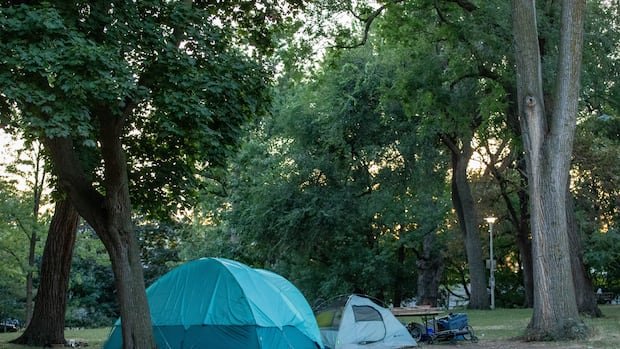

A legal challenge against Hamilton’s anti-encampment bylaw was reinstated by the top court in Ontario on Friday. The Court of Appeal for Ontario determined that the lower court had unfairly dismissed the testimonies of homeless residents based on stereotypes. The constitutionality of the bylaw and the city’s enforcement practices will now be re-evaluated by a new trial judge.
Fourteen encampment residents initiated the challenge, arguing that their evictions and the city’s ban on sleeping in parks were unconstitutional. This case is part of a broader legal debate in Canada on whether cities can dismantle encampments without providing suitable alternative shelter when city-run facilities are full.
The appeal court’s unanimous ruling criticized the trial judge for disregarding residents’ testimonies, citing their mental health and addiction issues as reasons for skepticism. The court emphasized the need for a fair and individual assessment of evidence without resorting to stereotypes.
The appeal court also identified flaws in the initial decision, highlighting the exclusion of crucial evidence about Hamilton’s homeless population and a failure to apply the appropriate legal standards regarding Charter rights violations.
The case has been remanded back to the Superior Court for reconsideration by a different judge. The City of Hamilton is currently assessing the implications of the appeal court’s decision, emphasizing its commitment to supporting homeless individuals while ensuring public access to parks.
This ruling follows a previous case in Waterloo Region where a judge blocked the clearing of an encampment due to inadequate alternative shelter options. The Hamilton Community Legal Clinic, representing the applicants, welcomed the thorough analysis by the appeal court and stressed the importance of addressing homelessness through affordable housing solutions.