

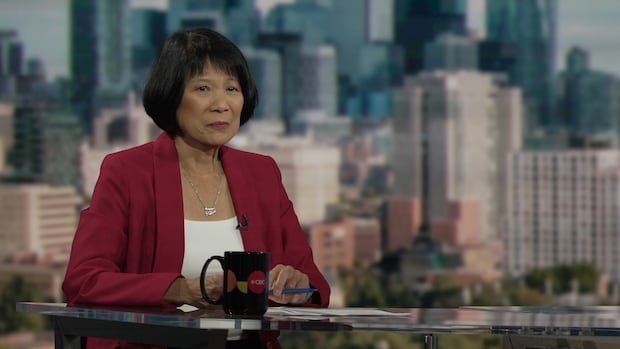

Olivia Chow, the current mayor of Toronto, vigorously defended her decision to raise property taxes, emphasizing that these increases have been instrumental in steering the city in the right direction. Since her election in the 2023 mayoral byelection, Chow implemented a 9.5% property tax hike in her initial full budget, followed by subsequent increases of 6.9% and 2.2% respectively. Her opponent, Brad Bradford, criticized these tax raises, labeling them as unsustainable.
During a recent interview on CBC Radio’s “Metro Morning,” Chow stood by her policy, asserting that the property tax increments were essential for the city’s financial recovery. She highlighted the significant budget deficit of $1.8 billion upon assuming office, largely attributed to the impacts of COVID-19, and emphasized that Toronto’s financial situation has significantly improved since then.
Chow pledged to maintain property tax increases in line with or close to the inflation rate if re-elected, without specifying a precise figure. She explained that any increase would not surpass one percent above the inflation rate, using two percent as an illustrative example during the CBC Toronto mayoral debate.
Reflecting on her tenure, Chow described inheriting a city in disarray, drawing parallels to a home with a leaking roof. She cited instances such as the derailment of the Scarborough RT, underscoring the urgent need for substantial funding to address critical issues within the TTC. Chow also emphasized the necessity of funding crisis response services to combat escalating crime rates in the city.
While acknowledging that the TTC’s services are not flawless, Chow credited the improved reliability to increased spending facilitated by higher property tax revenue. She also attributed the decrease in city encampments to investments directed towards affordable housing initiatives. The Financial Accountability Officer of Ontario reported an approximate eight percent decline in homelessness in the city since 2022-23.
In contrast, Bradford, Chow’s opponent, advocates for a one-year freeze on property taxes if elected as mayor, insisting that it would not include the city’s building fund component levied through the property tax system. Chow criticized Bradford’s proposal, contending that it effectively represents a 1.5% tax increase due to the building levy’s exclusion.
Both candidates have proposed substantial spending initiatives, with Bradford focusing on reducing the land transfer tax, revitalizing TTC infrastructure, bolstering police forces, and restructuring Toronto Water. Chow, on the other hand, has promised to freeze and cap TTC fares and implement a city-wide school lunch program. The election is scheduled for October 26, with over 50 candidates vying for the mayoral position in Toronto.