

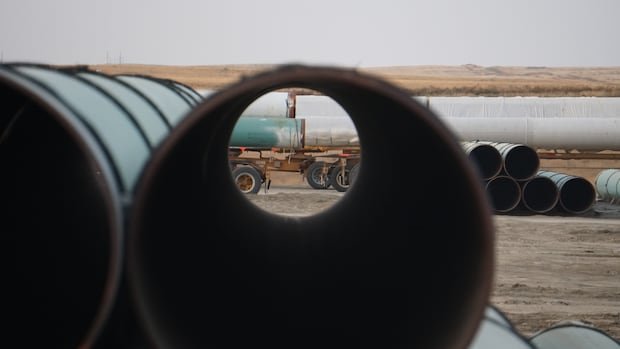

U.S. President Donald Trump has hinted at the possibility of reviving the Keystone XL oil pipeline project, which was previously abandoned by past administrations, as part of a new trade agreement with Canada. However, industry experts suggest that Trump’s statement may be more politically motivated than focused on the petroleum sector.
In a recent social media update, Trump announced a temporary pause on new tariffs on Canadian goods, signaling a “deal” with Canada. He mentioned the revival of the Keystone XL Pipeline, which had been discontinued by the Biden administration. While Prime Minister Mark Carney did not directly address Trump’s post, Dennis McConaghy, a former executive involved in the project, viewed this development as potentially beneficial for trade negotiations between the two countries.
Since imposing tariffs on Canadian goods in early 2025, Trump has emphasized reducing dependency on Canadian imports, despite exempting certain essential items like oil from tariffs. The potential revival of the Keystone XL project aligns with Trump’s stance on minimizing reliance on Canadian resources.
While some experts see Trump’s interest in Keystone XL as a positive signal, others caution that reviving the project could face challenges, including political and environmental hurdles. Valérie Beaudoin, a member of the government’s Advisory Committee on Canada-U.S. Economic Relations, believes that approving the pipeline could be easier for Carney than for Trump, given the uncertainties surrounding future administrations and their policies.
The Keystone Pipeline System, which transports crude oil to U.S. refining markets, remains a crucial part of Canada’s energy exports. The proposed Prairie Connector project, a collaboration between South Bow Corp. and Bridger Pipeline, aims to enhance Canada’s oil exports to the U.S. by utilizing existing Keystone XL infrastructure.
Despite Trump’s interest in advancing the Keystone XL project, uncertainties persist regarding its feasibility and timeline. The potential economic benefits of such initiatives have garnered attention, but final decisions on these projects are pending.
Overall, the discussions around reviving the Keystone XL project highlight the complexities of cross-border trade relations and the strategic considerations involved in energy infrastructure development.