


Google Maps has updated its labeling to show “Lake America,” a change that has caught the attention of U.S. President Donald Trump, who is now urging Apple to follow suit and incorporate the new label in its iPhone navigation app.
This development has brought to light a concerning reality for many Canadian consumers and businesses, revealing their heavy reliance on U.S.-based platforms with limited non-American alternatives. Anne Pasek, a Canada Research Chair at Trent University, emphasized that Canadians are significantly impacted by American tech monopolies, as their digital activities fall under the jurisdiction and influence of U.S. companies and laws.
Recently, several Canadian websites, including governmental and banking sites, have featured maps with Lake Ontario renamed as Lake America. This adjustment was made in compliance with an executive order from Trump aimed at renaming the Great Lakes amid escalating trade disputes between the two nations.
Google implemented the change for its U.S. users and provided an option for non-American websites to display the original “Lake Ontario” label by adjusting their maps to reflect the Canadian region. The company clarified that this update aligns with its existing policy regarding differing names for bodies of water across countries.
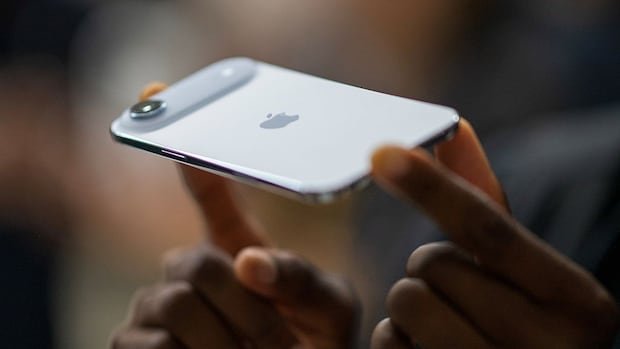
Although Trump has reached out to Apple to request the switch to “Lake America” on their applications, the tech giant has not issued any public responses. Mapping services from major U.S. tech companies play a crucial role in the operations of numerous Canadian businesses, offering essential information like contact details, reviews, and operational hours. Additionally, these tools support e-commerce functions, address auto-completion, and facilitate traffic monitoring for ride-sharing and food delivery services.
Emily Osborne, a policy research associate at the Canadian Shield Institute, highlighted the heavy reliance on American tech firms for digital services in Canada. She suggested alternatives like Dutch companies TomTom and HERE Technologies for navigation needs, as the country previously had a domestic option with Toronto-based Avenza Systems, which was acquired by Blue Marble Geographics.
Amid concerns of potential tech-related pressure from the U.S., Osborne pointed out vulnerabilities in sectors such as payment processing and cloud storage. She emphasized the risk for Canadian businesses relying on U.S.-owned digital infrastructure, citing the impact of past incidents like the AWS outage on Canadian operations.