

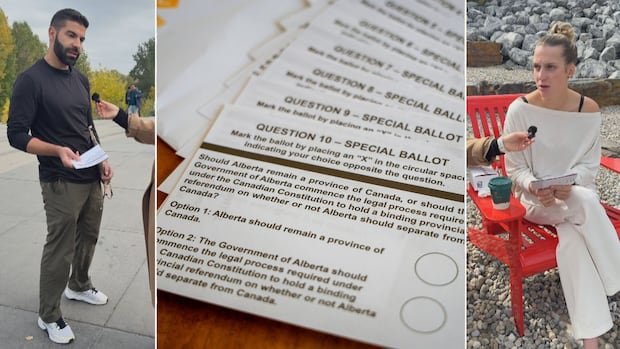

Carla Hudson Kam, head of linguistics at the University of British Columbia, finds the Alberta referendum questions challenging due to their complexity. Hudson Kam, with a PhD herself, emphasizes that the questions’ structure and length make them difficult for many Albertans to comprehend easily. She notes that the wording and clauses in the questions surpass the average reading level of most individuals.
The lengthiest question, the eighth one, touches on whether voters support Alberta’s withdrawal from federal programs to fund provincial initiatives. The official question delves into amending the Canadian Constitution to allow provinces to opt out of federal programs without losing funding for essential services like healthcare and education.
The complexity and length of the referendum questions may require voters to read them multiple times for full understanding. The Flesch-Kincaid readability test indicates that the questions are challenging to comprehend, with some rated at a “college graduate” reading level.
As the Oct. 19 referendum nears, concerns arise over the public’s familiarity with the questions. Polls suggest that nearly half of surveyed individuals are not well-versed in the nine non-separation-related questions. Election observers report that attendees at information events appear overwhelmed by the complexity of the questions.
Elections Alberta clarifies that they cannot interpret the questions and direct inquiries to the government or local representatives. Various initiatives are underway to inform Albertans about the referendum’s content and voting process, including multilingual guides and provisions for assistance during voting.
Hudson Kam advises voters to thoroughly understand the questions before casting their votes, cautioning against relying solely on others’ interpretations due to the potential for misinformation. With the referendum questions poised to influence significant decisions, she stresses the importance of individual comprehension and informed decision-making.