


A study in Alberta is investigating the combination of walking and psychotherapy as a treatment for post-traumatic stress disorder (PTSD). Researchers suggest that the findings from a recent clinical trial add to the growing evidence supporting the effectiveness of this approach.
Previous research at the University of Alberta focused on veterans and active military personnel, but more recent studies have broadened to include emergency responders and healthcare workers.
The trial results were recently published, showcasing the efficacy of a treatment process known as Multi-modal Motion-assisted Memory Desensitization and Reconsolidation (3MDR). While originally developed in the Netherlands over a decade ago, the University of Alberta is the sole Canadian lab conducting trials on this method.
Dr. Suzette Bremault-Phillips, an occupational therapist and professor at the University of Alberta, heads the study. She leads the Heroes in Mind Advocacy and Research Consortium (HiMARC), a research group supporting the well-being of military members and veterans.
PTSD stems from exposure to traumatic events and can lead to depression, anxiety, insomnia, irritability, and difficulties in daily interactions, often resulting in self-isolation or strained relationships.
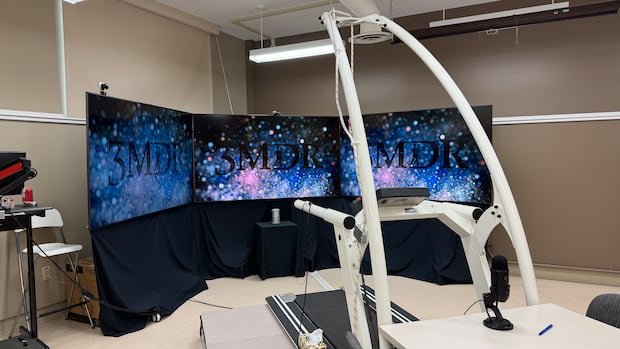
3MDR therapy integrates talk therapy, imagery, sounds, and walking to treat patients with PTSD. During the session, patients walk on a treadmill towards screens displaying selected images related to their trauma. A therapist guides the patient through questions about the images, followed by distractions to help disconnect from triggering memories.
The University of Alberta study involved 48 participants with PTSD, including military members, veterans, first responders, and healthcare workers. Results have shown significant improvements in a shorter time compared to other available treatments, with participants experiencing lasting benefits from the therapy.
The physical movement aspect of 3MDR aids patients in engaging with the treatment, allowing them to confront and process their trauma effectively. Veterans have expressed enthusiasm for the treatment’s potential, highlighting its ability to create a safe space for individuals to address their traumatic experiences.
Overall, the simplicity and flexibility of 3MDR make it a promising treatment option that could be implemented in various settings, including rural areas and military bases, potentially aiding in early intervention for PTSD and supporting resilience in affected individuals. Veterans Affairs Canada acknowledges the promise of 3MDR as a treatment approach for veterans with PTSD and is actively monitoring its progress and impact.