

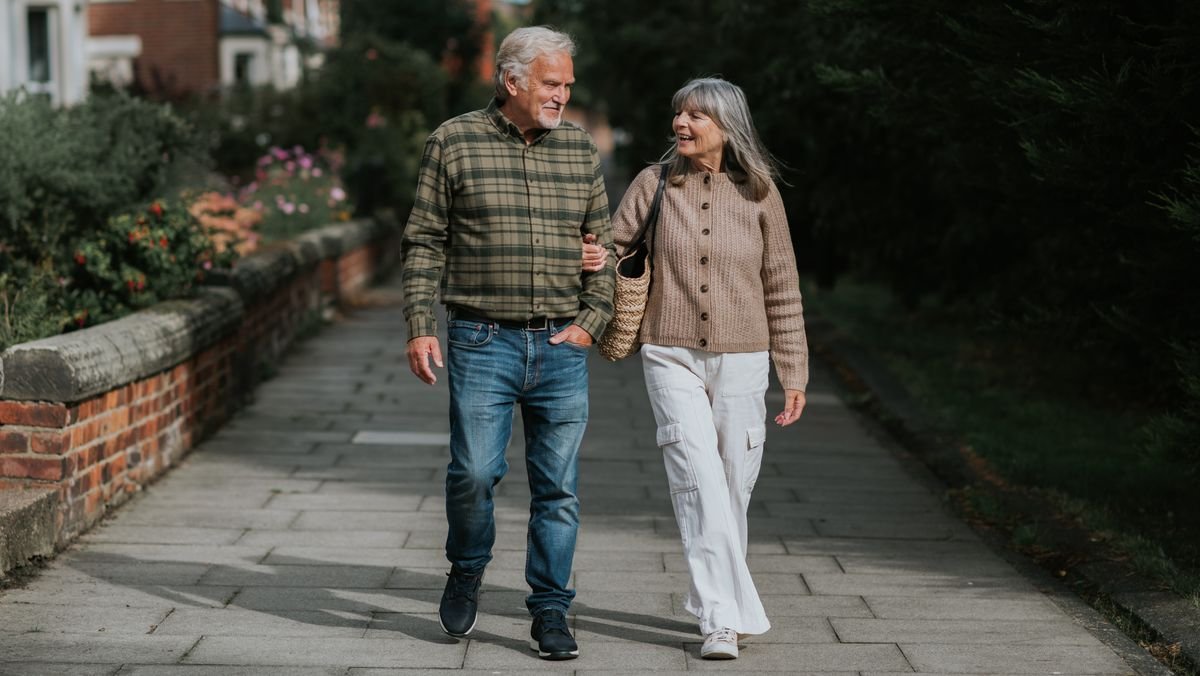

A recent study suggests that implementing a straightforward daily habit could potentially extend your lifespan by an impressive 11 years. The key to unlocking this additional decade of life does not involve costly supplements or strenuous gym sessions but simply entails the act of walking.
In light of research published in the British Journal of Sports Medicine, individuals in the UK are encouraged to reassess their daily physical activity. The study revealed that individuals over 40 who are most active could potentially live up to 11 years longer than their sedentary peers by engaging in 160 minutes of daily walking.
While committing to three hours of exercise may seem challenging for the average office worker, experts emphasize that the activity does not have to be solely treadmill-based. The study, utilizing activity monitors for accurate tracking, highlighted that even “gentle” movements hold the same value as brisk walks.
The report clarifies that the recommended daily walking time can be spread throughout the day and does not require specialized sports gear. Every step counts, whether it’s walking to the bus stop, using the stairs, doing household chores, walking the dog, or simply pacing during phone calls. The cumulative impact of these low-intensity activities is significant.
By increasing their movement levels to meet the study’s criteria, less active individuals could potentially raise their average life expectancy from the late seventies to the mid-eighties. Life Pro insurance specialists caution that the prevalent sedentary lifestyle poses a significant health risk in the UK, contributing to conditions like heart disease, stroke, and type 2 diabetes.
The lack of physical activity is identified as a primary factor behind many life-threatening incidents, leading to premature mortality. As winter approaches, the tendency to avoid outdoor activities and opt for prolonged sitting poses additional risks to heart health and overall well-being.
Experts highlight that consistent movement is crucial for maintaining cardiovascular health, managing blood pressure, and controlling weight. For individuals finding the 160-minute target daunting, suggestions include breaking down the activity into manageable segments or considering home-based solutions such as walking pads or basic treadmills.
In conclusion, establishing a regular walking routine could significantly enhance overall health and potentially add more healthy years to one’s life. Conversely, prolonged periods of inactivity and avoidance of movement may elevate the risk of premature and preventable death.