

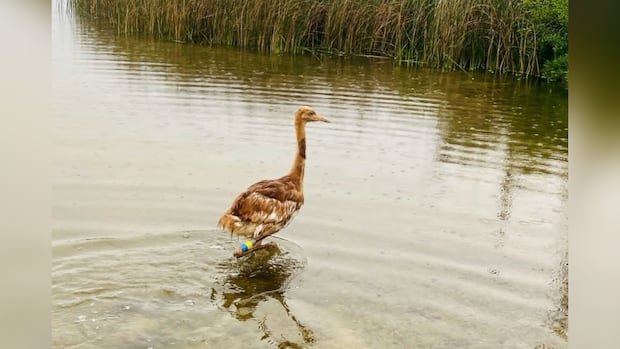

Around 40 whooping crane chicks have been born in Wood Buffalo National Park after a recent wildfire put their habitat and nesting areas at risk. Parks Canada staff have managed to tag approximately 20 of the chicks with bands and tracking devices. According to Nicolas Comerford, an ecologist at Parks Canada, the season started positively with a record number of 119 nests documented in May. However, the situation quickly changed as wildfires grew over the summer months.
Whooping cranes, an endangered species with only around 550 individuals in the wild, faced additional challenges due to the ongoing drought. The dry conditions led to lower water levels, making nests more vulnerable to predators and forcing the birds to travel farther for food, putting their eggs and hatchlings in jeopardy.
Ernie Kuyt, a renowned biologist known for his efforts in saving whooping cranes from extinction, highlighted the impact of low water levels on the birds during their nesting season. Out of the 119 nests observed, the 40 hatchlings represent a productivity rate of approximately 34 percent, which Comerford noted as slightly lower than average. Productivity rates for whooping crane breeding can vary from 25 percent to 80 percent, largely dependent on the water levels during the season.
The wildfires this year further exacerbated the challenges for the cranes, with some nests escaping unscathed while others were abandoned or destroyed. The drought remains the primary source of concern, as highlighted by Comerford during the banding operation where one of the chicks had to be swiftly banded and assessed before being released back into the wild.
Ronnie Schaefer, a resident of Fort Smith, who frequently monitors the whooping cranes in the park, has a special connection to the birds, often accompanied by his late wife Cindy. In honor of her dedication to the endangered species, one of the juvenile cranes has been named “Chickie,” Cindy’s nickname, as it prepares for its migration south in mid-September. Schaefer expressed his gratitude for the gesture and looks forward to tracking Chickie’s journey southward, with the public encouraged to report sightings using the distinctive color band (gray, yellow, and blue) on the crane.
Overall, the successful hatching of around 40 whooping crane chicks in Wood Buffalo National Park this year is a positive development amid the challenges posed by wildfires and drought. The efforts of Parks Canada staff and dedicated individuals like Ronnie Schaefer continue to play a crucial role in the conservation of this endangered species.