

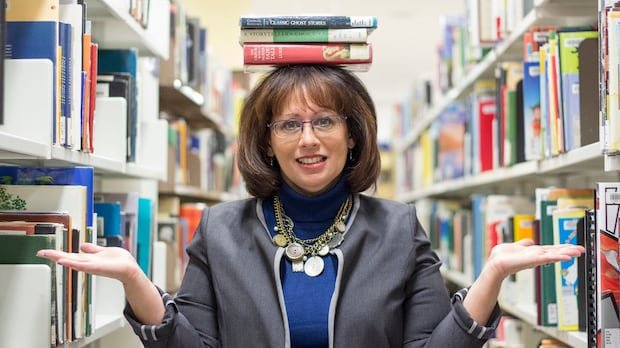

In Edmonton, as the year 1999 drew to a close, Desiree Kendrick, a resident, prepared for potential disaster by stocking up on canned goods and powdered milk. She had a well-stocked pantry and a water tank in her garage, ready for any emergency. Kendrick, like many others at the time, was part of the Y2K generation, fearing a global computer meltdown as the calendar flipped to the year 2000. Fortunately, both her personal preparations and businesses survived the Y2K scare.
Fast forward to the present day, and Kendrick finds herself struggling with the myriad of acronyms and abbreviations that dominate modern conversations. The complexity of today’s language, filled with acronyms and initialisms, feels like a foreign code to her, challenging her linguistic fluency.
Kendrick’s lifelong love of learning began with her parents, immigrants from India, who instilled in her a thirst for knowledge and discovery. Growing up in rural Alberta, surrounded by books, she was encouraged to continuously educate herself. Despite her exposure to diverse experiences, understanding the modern language shortcuts remains a challenge.
From workplace communications to online headlines, Kendrick is often left puzzled by abbreviations like “ICYMI” and “JSYK,” mistaking them for something else entirely. While familiar with classic acronyms like CK and DKNY in fashion, navigating the new language landscape proves to be a constant learning curve for her.
As a parent, Kendrick’s approach to language was more structured, emphasizing clear articulation and explanation to her children. However, with the evolution of slang and digital communication, she now relies on her kids to decode the latest abbreviations and terms, highlighting the generational shift in language usage.
In her quest to keep up with the linguistic trends, Kendrick humorously admits to occasional mix-ups like confusing “IRL” with “URL” and visualizing retail brands like JYSK instead of decoding modern slang. Despite feeling out of the loop at times, she embraces the ongoing learning process and acknowledges the importance of adapting to the changing language landscape.
Reflecting on the past, Kendrick fondly recalls simpler times when workplace slang was limited to classics like “TGIF.” Today, she finds herself googling terms like “YOLO” repeatedly, juggling work at a post-secondary institution where acronyms dominate department names, adding to the complexity of her language challenges.
In a world filled with abbreviations and slang, Kendrick finds solace in her practical communication skills and credits her parents as her greatest teachers, motivating her to continue mastering the ever-evolving language of today.